# LibreChat Mobile
[](https://github.com/danny-avila/LibreChat/releases/tag/v0.8.5)
A third-party native mobile client for [LibreChat](https://www.librechat.ai/) (Android & iOS). Not affiliated with the official LibreChat project — this is an independent app that connects to any self-hosted LibreChat server, no backend modifications required.
> **Backend compatibility:** Tested against LibreChat **v0.8.4 – v0.8.5**. Older releases may work but are not guaranteed; newer releases are supported on a best-effort basis until the next sync.
## Features
- **Chat** — Real-time streaming (SSE), message branching & sibling navigation, stop/regenerate/continue, markdown with syntax highlighting, LaTeX math rendering, code blocks with copy, image display, file attachments, tool call progress cards
- **Model Selection** — Searchable bottom sheet grouped by endpoint, model comparison mode
- **Agents** — Marketplace with search and categories, MCP server configuration
- **Conversations** — Paginated list with date grouping, tags, search, rename, archive, delete, share, fork, duplicate, export/import
- **Presets & Prompts** — Save/load chat presets, prompts library with @mention insertion
- **Authentication** — Login, registration, forgot password, two-factor (TOTP + backup codes), OAuth (Google, GitHub, Discord, Facebook, Apple, OpenID)
- **Files** — Upload, list, delete, inline image rendering with pinch-to-zoom
- **Voice** — Speech-to-text input, text-to-speech playback (device and server engines)
- **Settings** — Theme (system/light/dark), account management, data controls
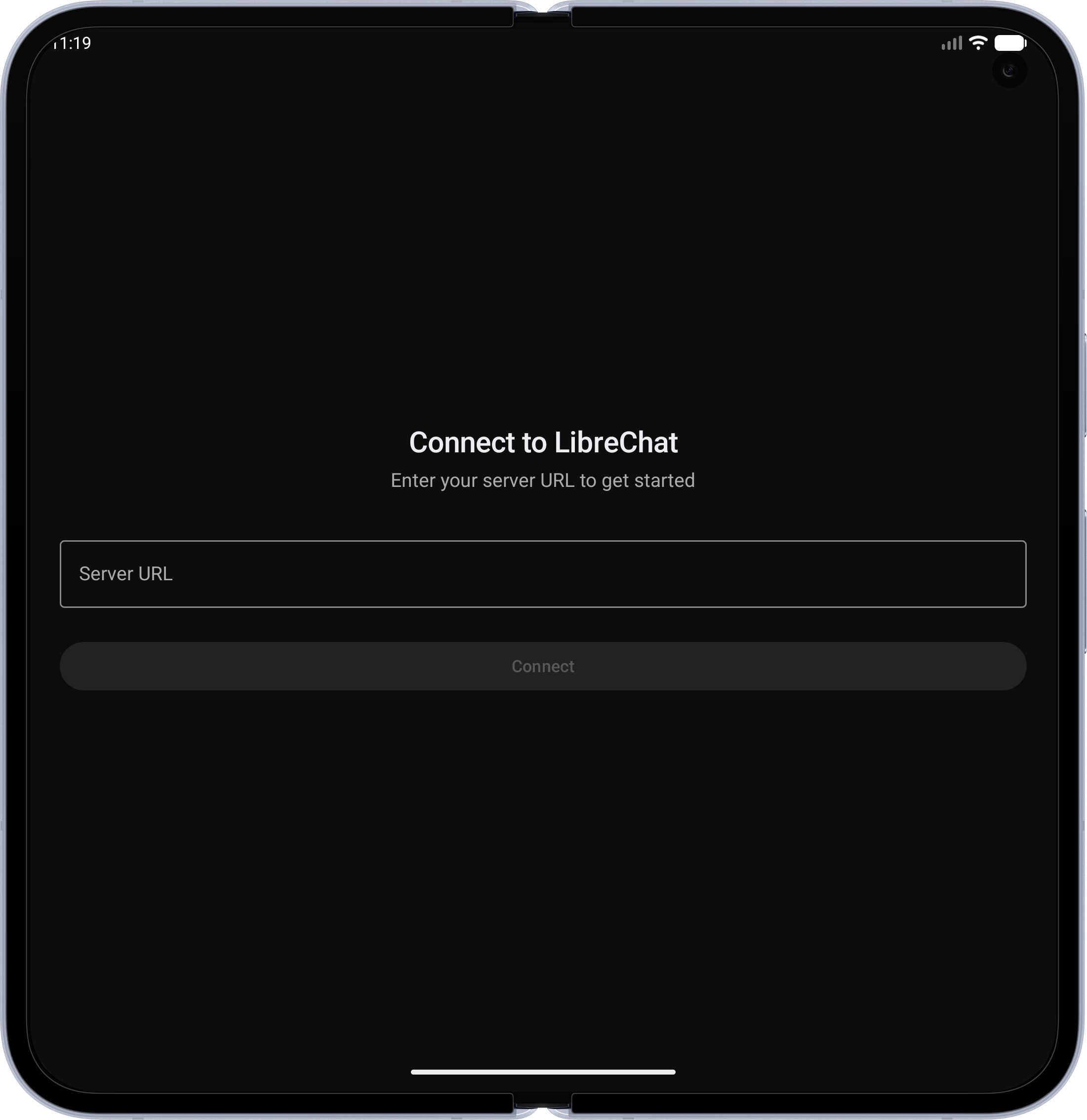
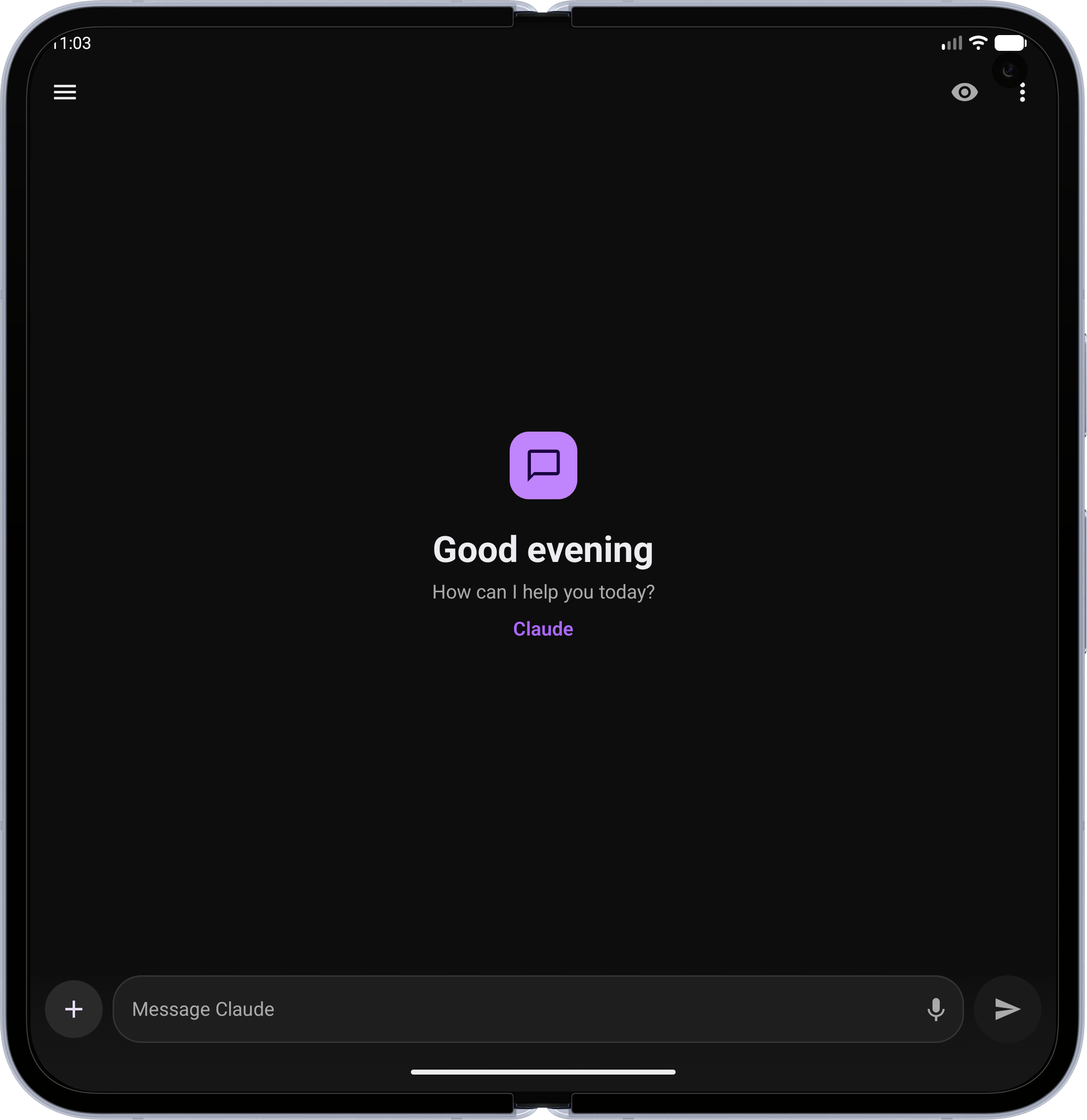
- **Tablet** — Adaptive dual-pane layout (600dp+) with persistent sidebar
- **Accessibility** — Semantic headings, content descriptions, 48dp touch targets, live regions
## Screenshots
| Feature | Phone | Tablet / Foldable |
|---|---|---|
| **Server Connect** — Point the app at any self-hosted LibreChat server | 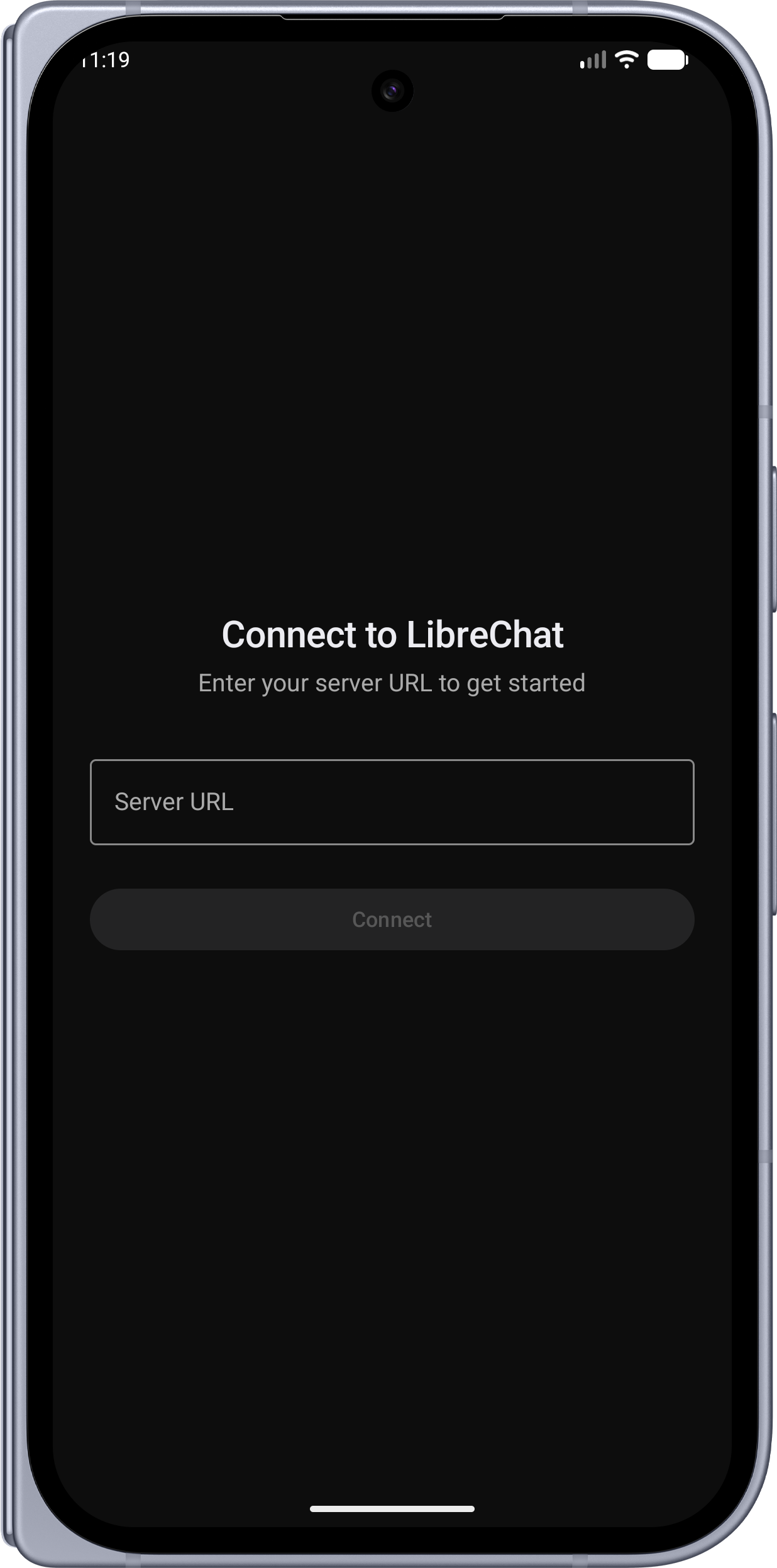 |
|  |
| **Home Screen** — Clean welcome screen with voice input and quick access |
|
| **Home Screen** — Clean welcome screen with voice input and quick access | 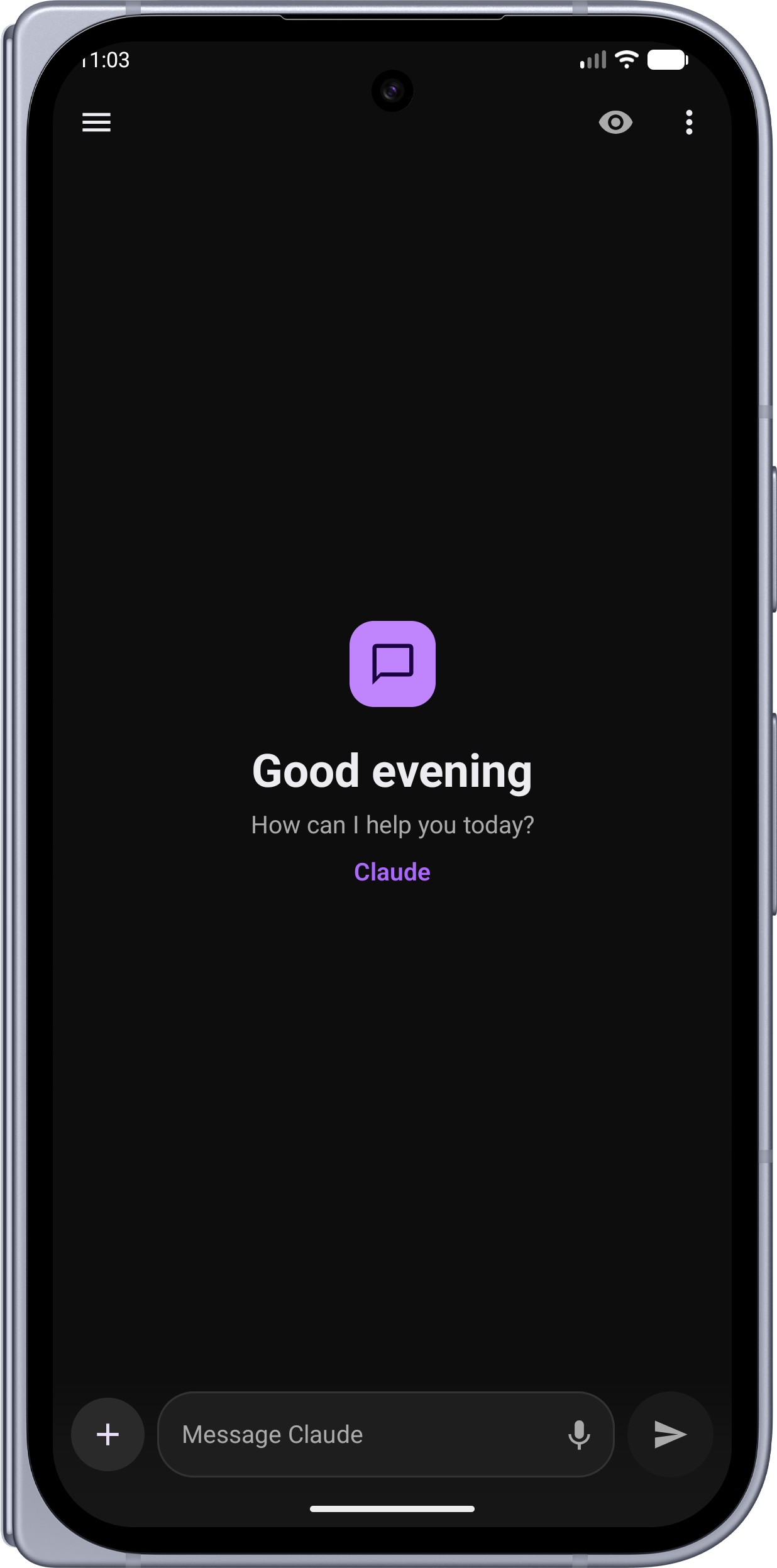 |
|  |
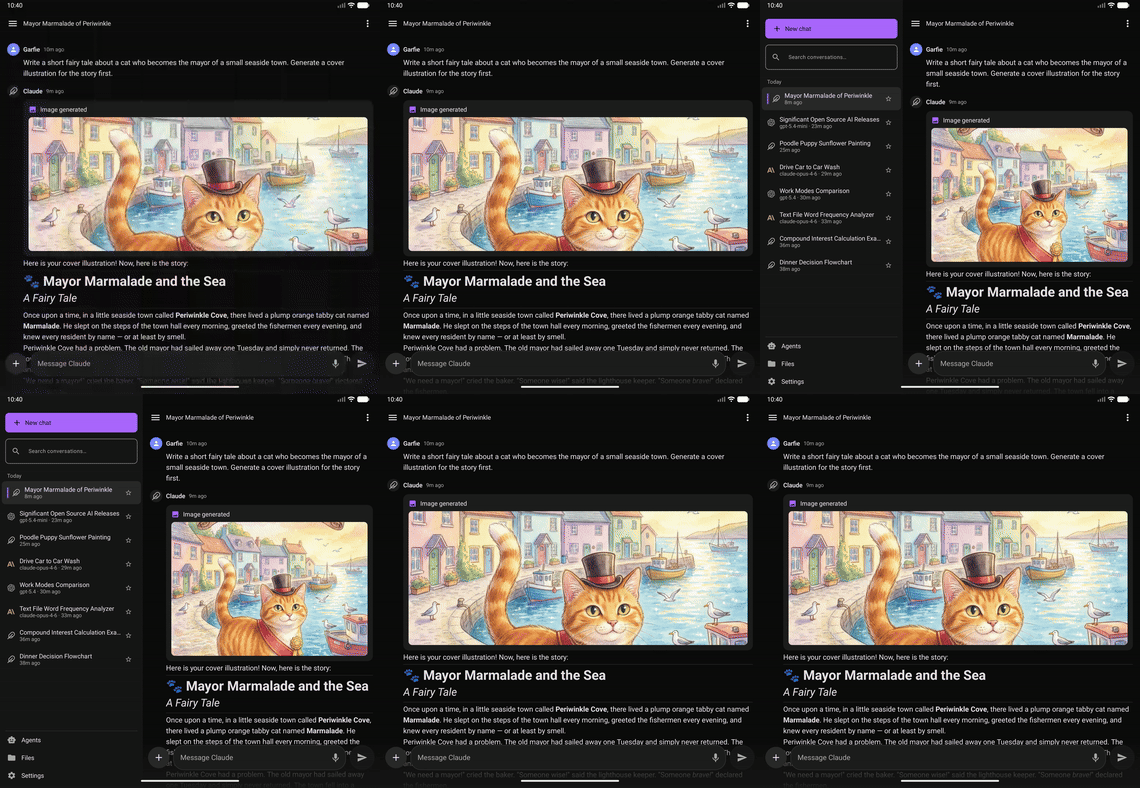
| **Conversations Sidebar** — Swipe to open your chat history with search, tags, and date grouping |
|
| **Conversations Sidebar** — Swipe to open your chat history with search, tags, and date grouping | 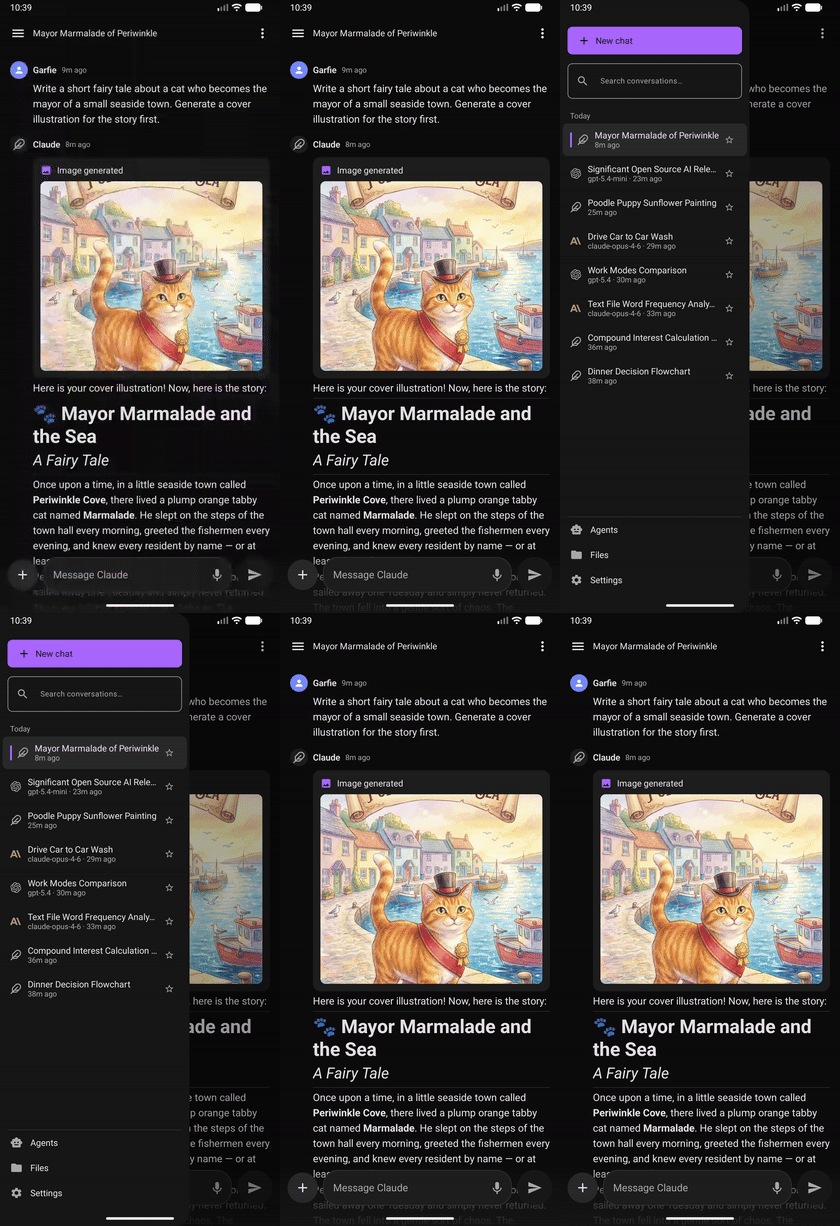 |
|  |
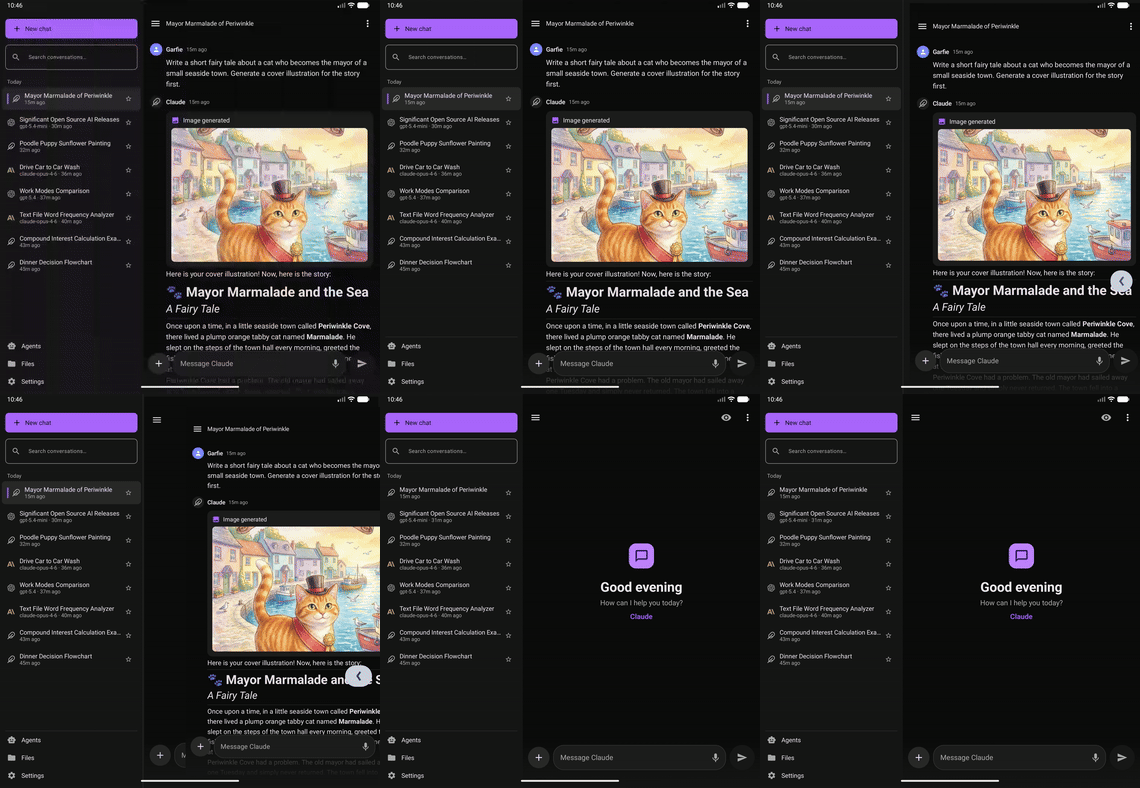
| **Predictive Back** — Native Android back gesture with peek animation |
|
| **Predictive Back** — Native Android back gesture with peek animation | 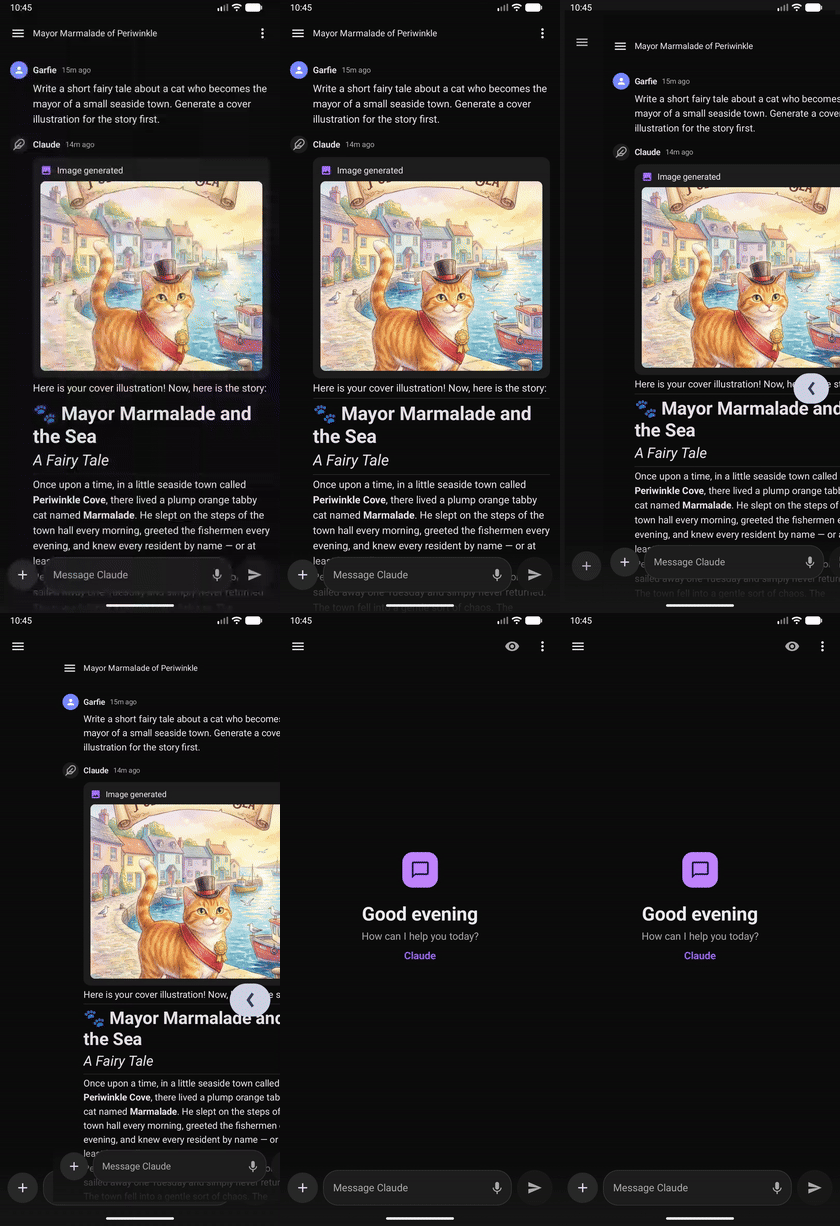 |
|  |
| **Mermaid Diagrams** — Interactive flowcharts and diagrams rendered in-chat |
|
| **Mermaid Diagrams** — Interactive flowcharts and diagrams rendered in-chat | 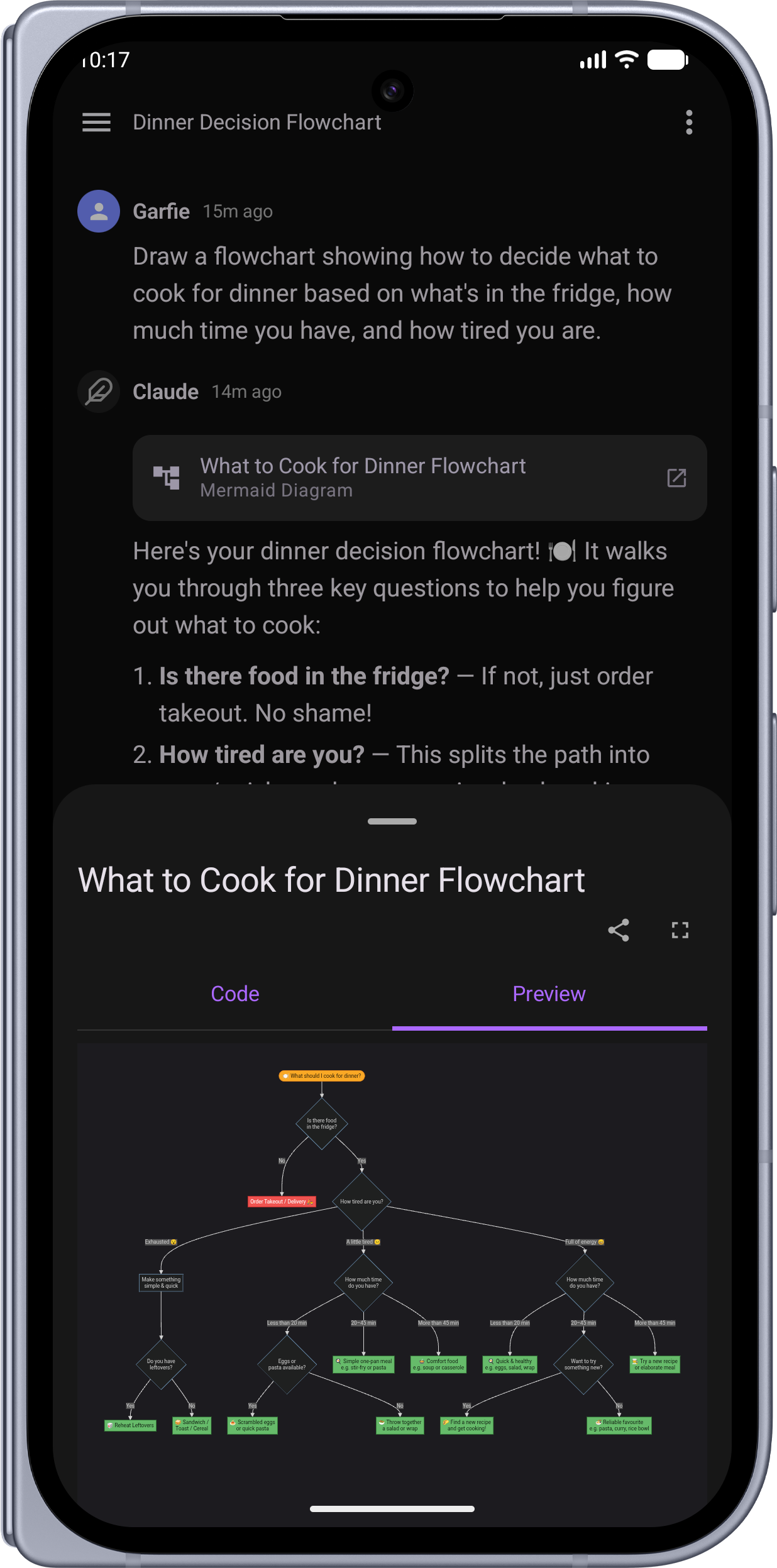 |
| 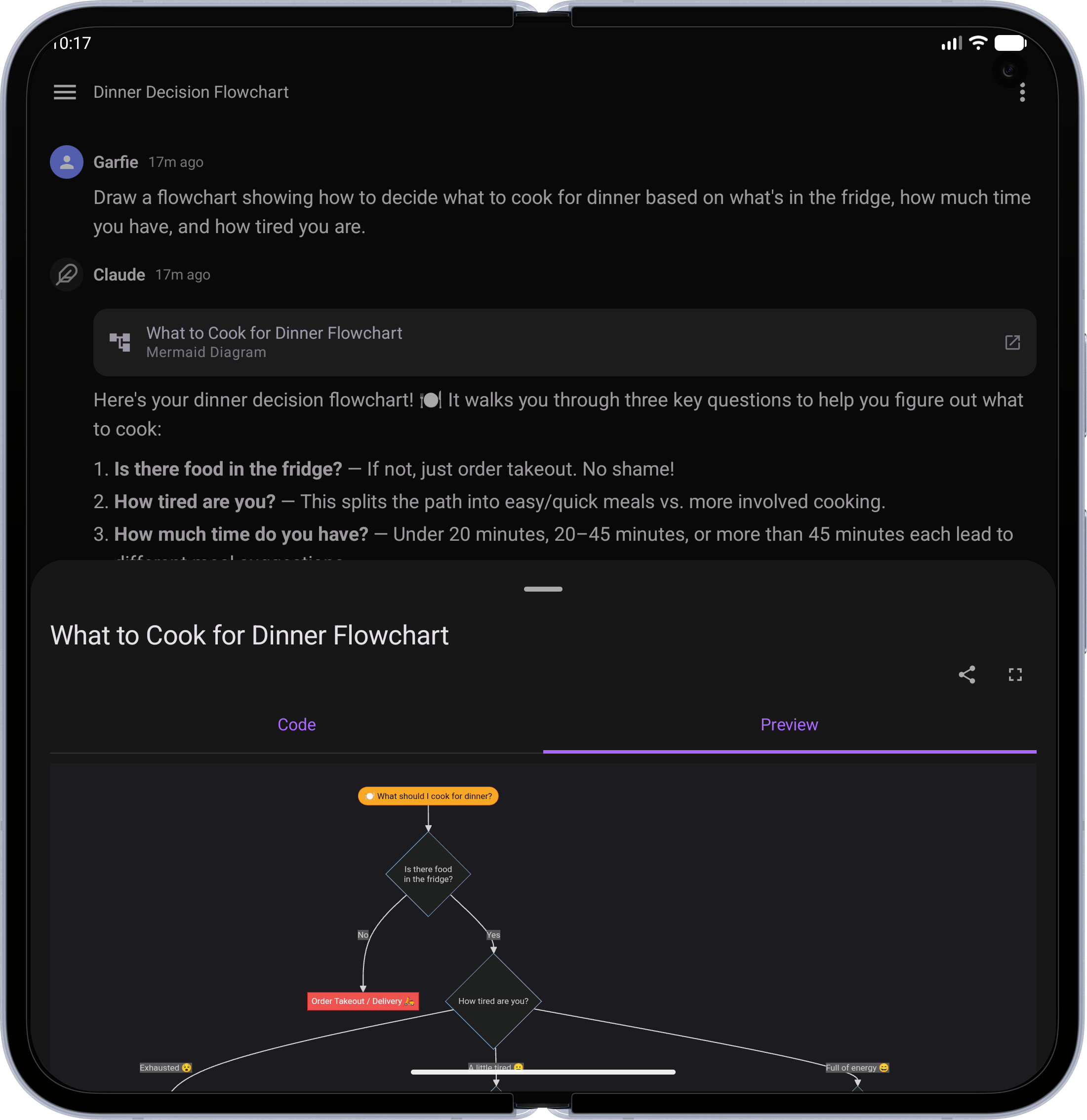 |
| **LaTeX Math** — Beautifully typeset equations and formulas |
|
| **LaTeX Math** — Beautifully typeset equations and formulas | 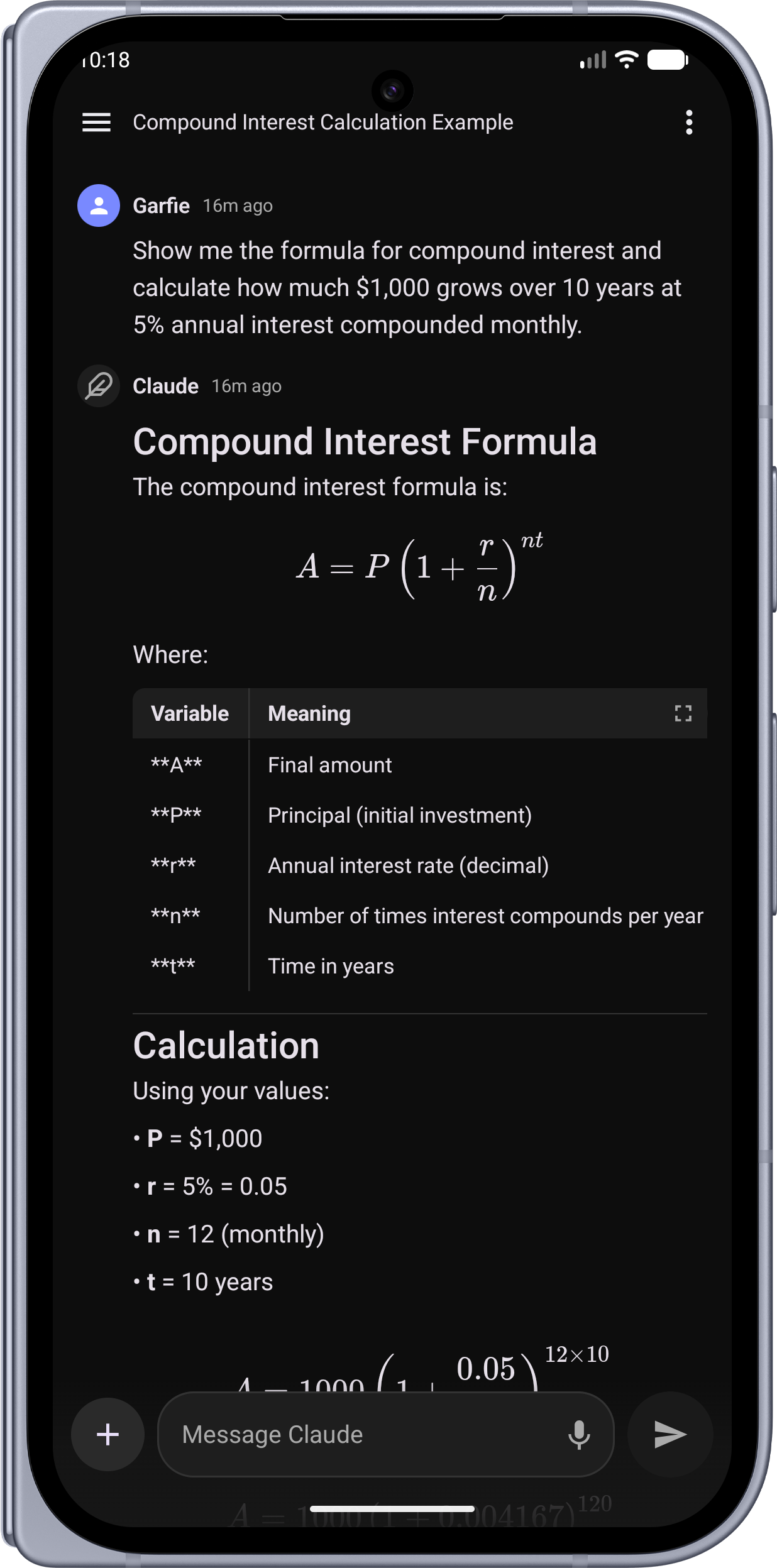 |
| 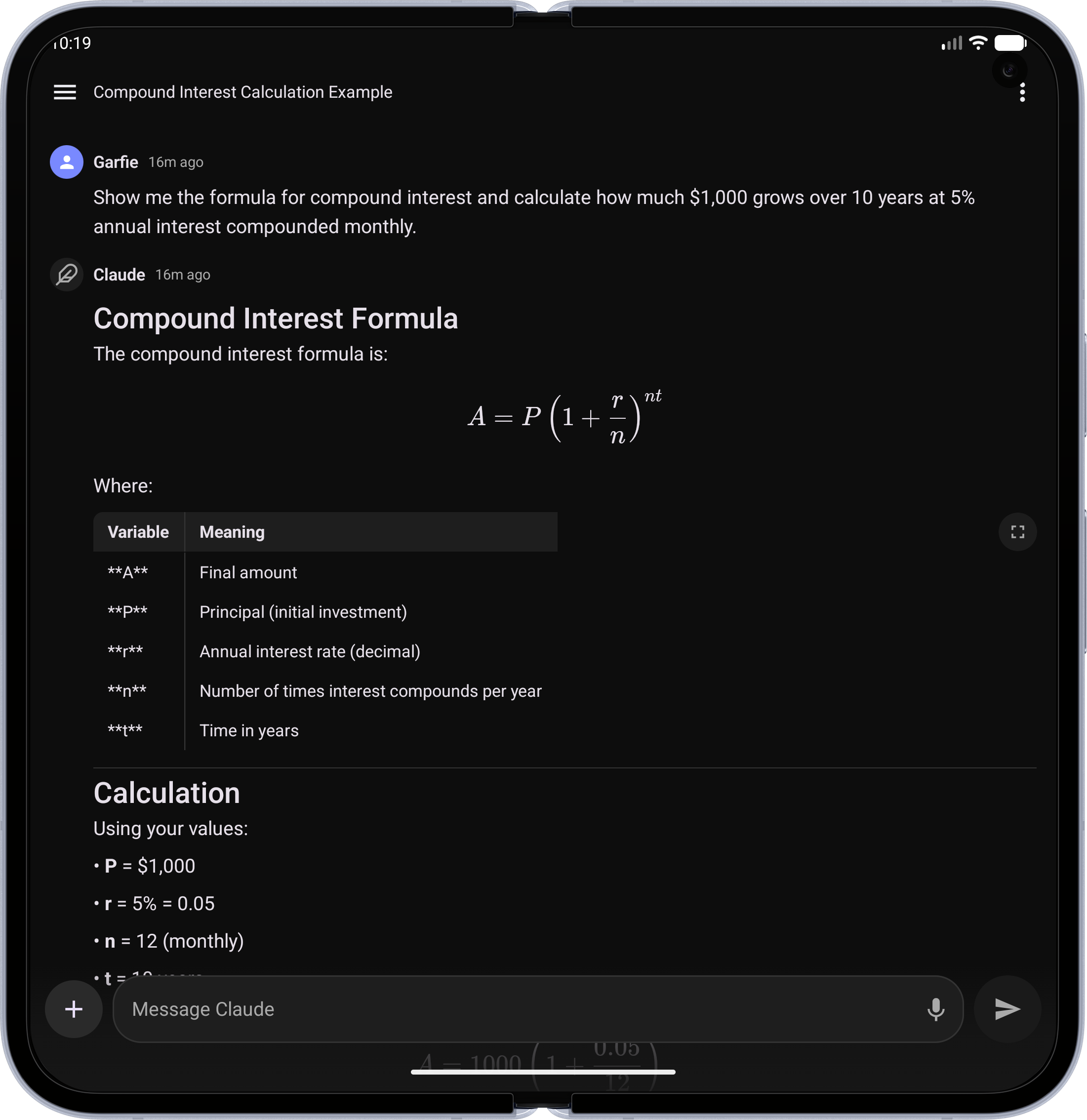 |
| **Code Blocks** — Syntax-highlighted code with language badge and copy button |
|
| **Code Blocks** — Syntax-highlighted code with language badge and copy button | 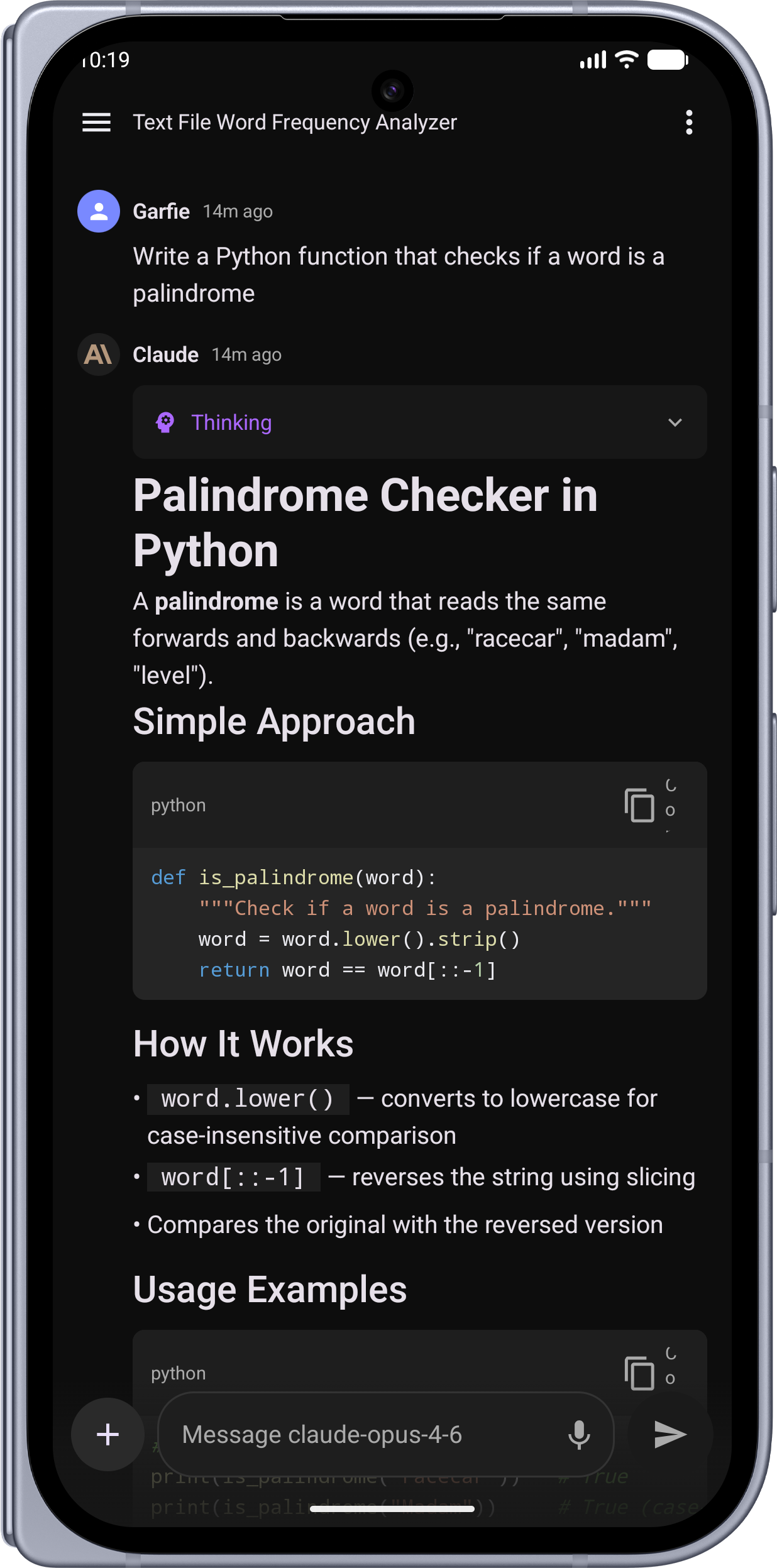 |
| 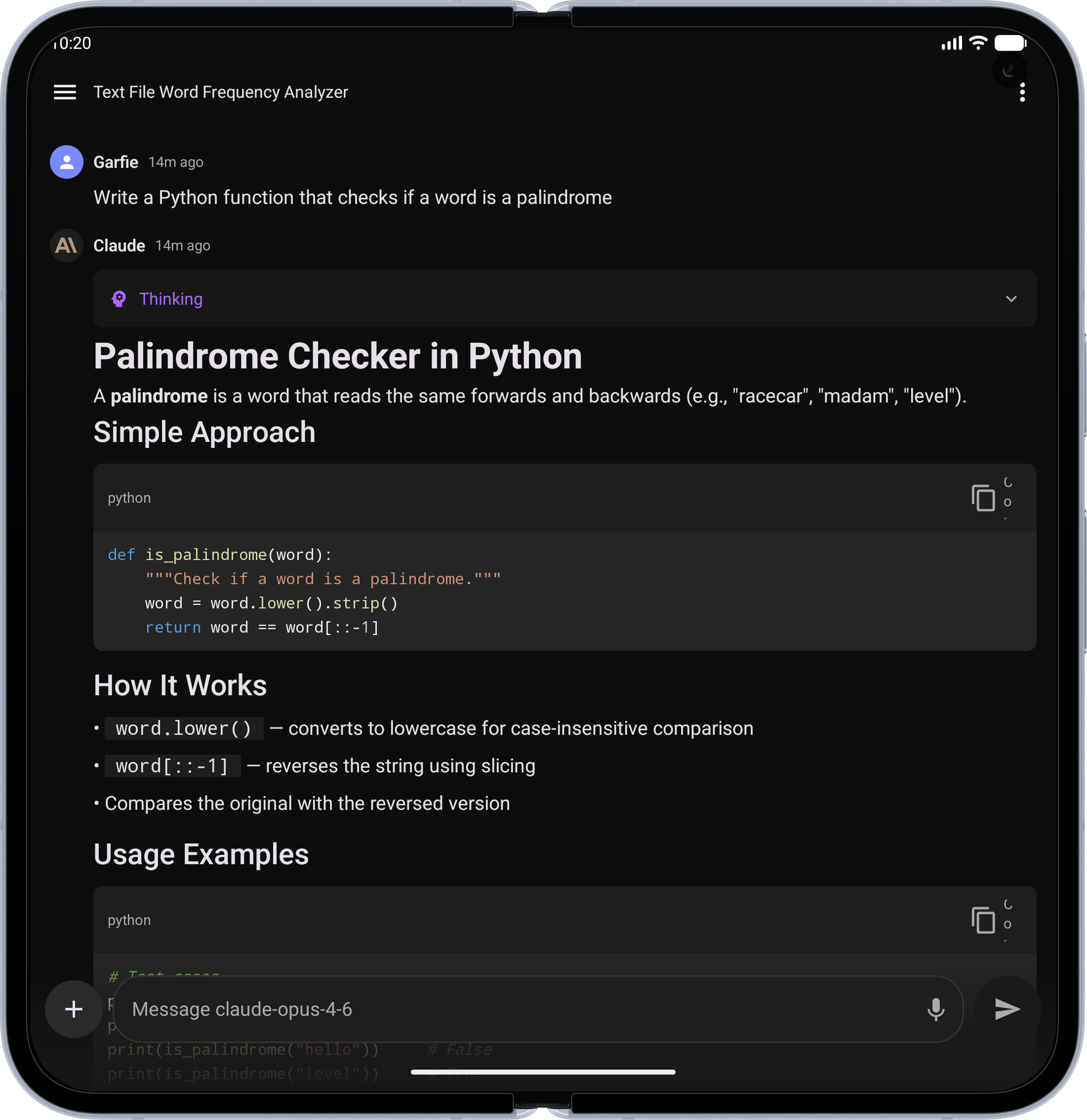 |
| **Tables** — Clean, scrollable data tables |
|
| **Tables** — Clean, scrollable data tables | 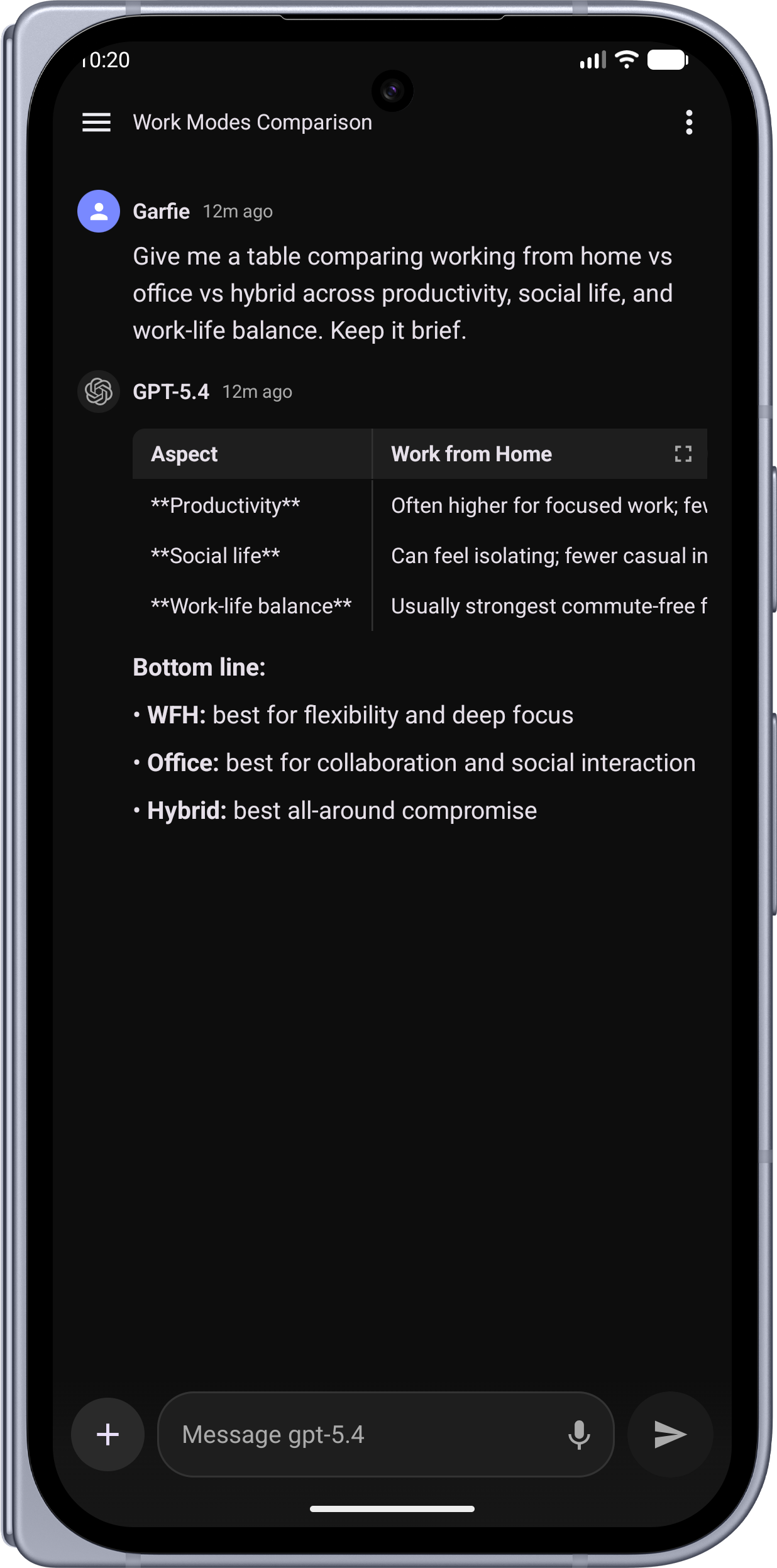 |
| 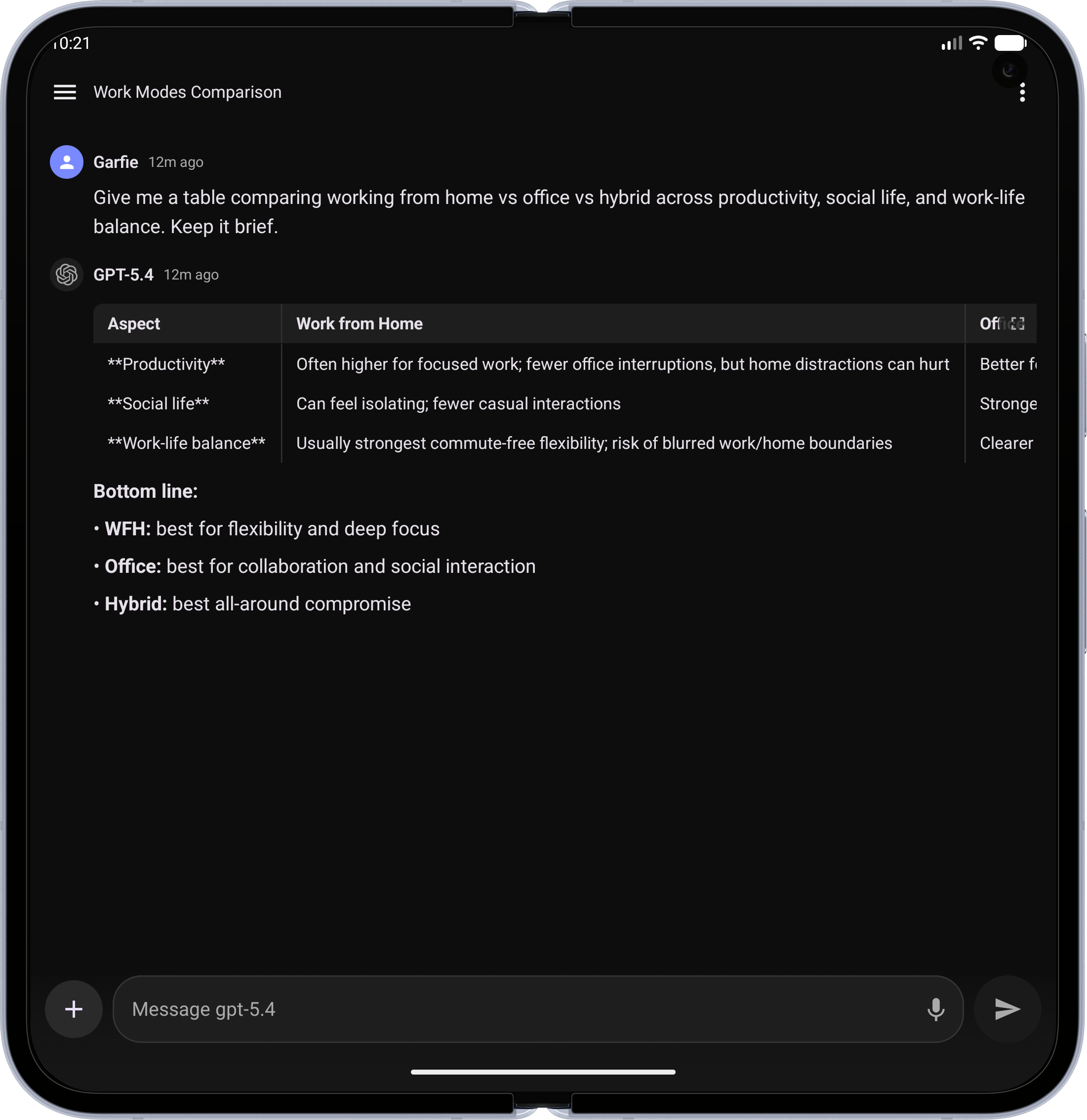 |
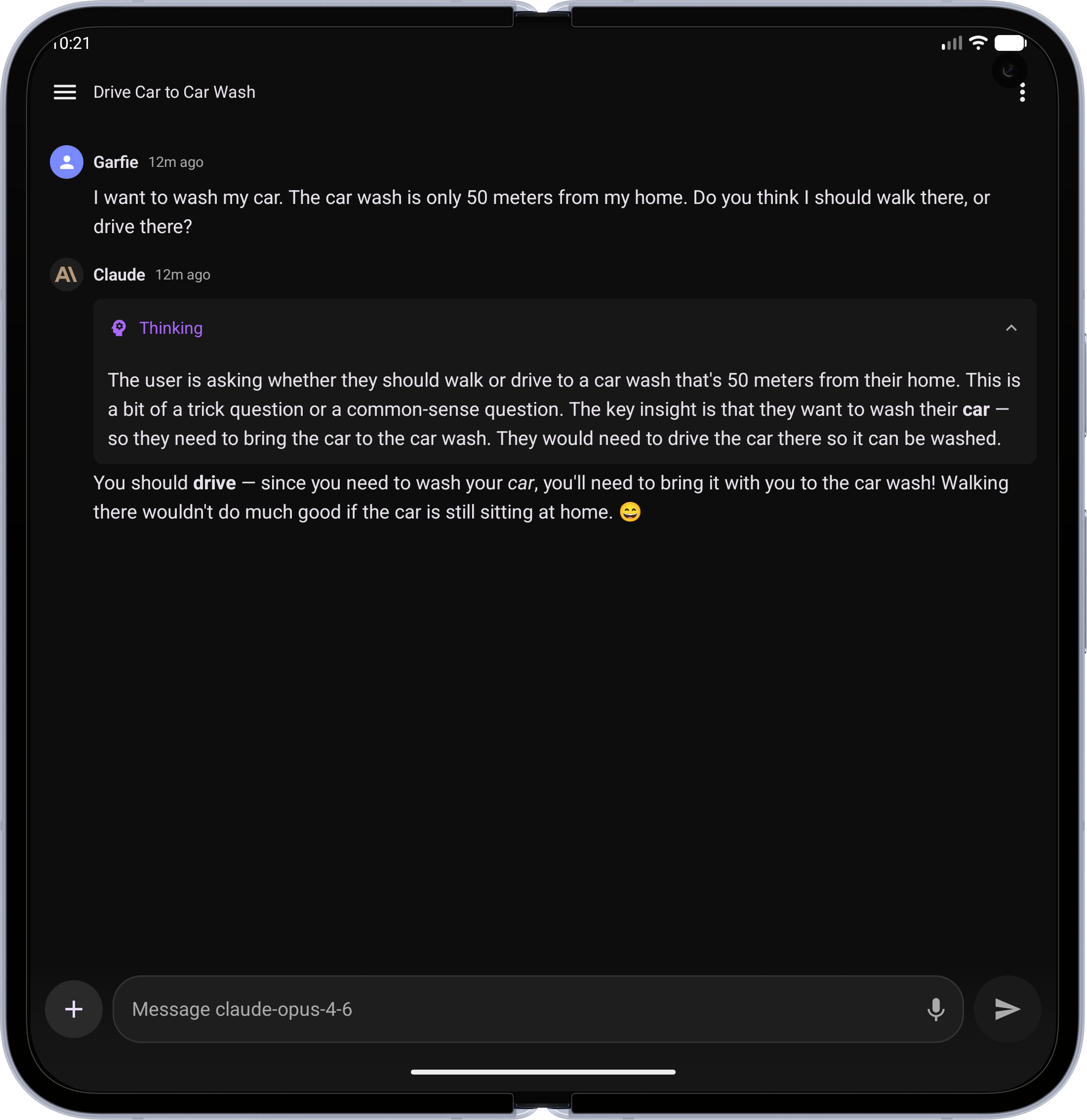
| **Extended Thinking** — See the model's reasoning process |
|
| **Extended Thinking** — See the model's reasoning process | 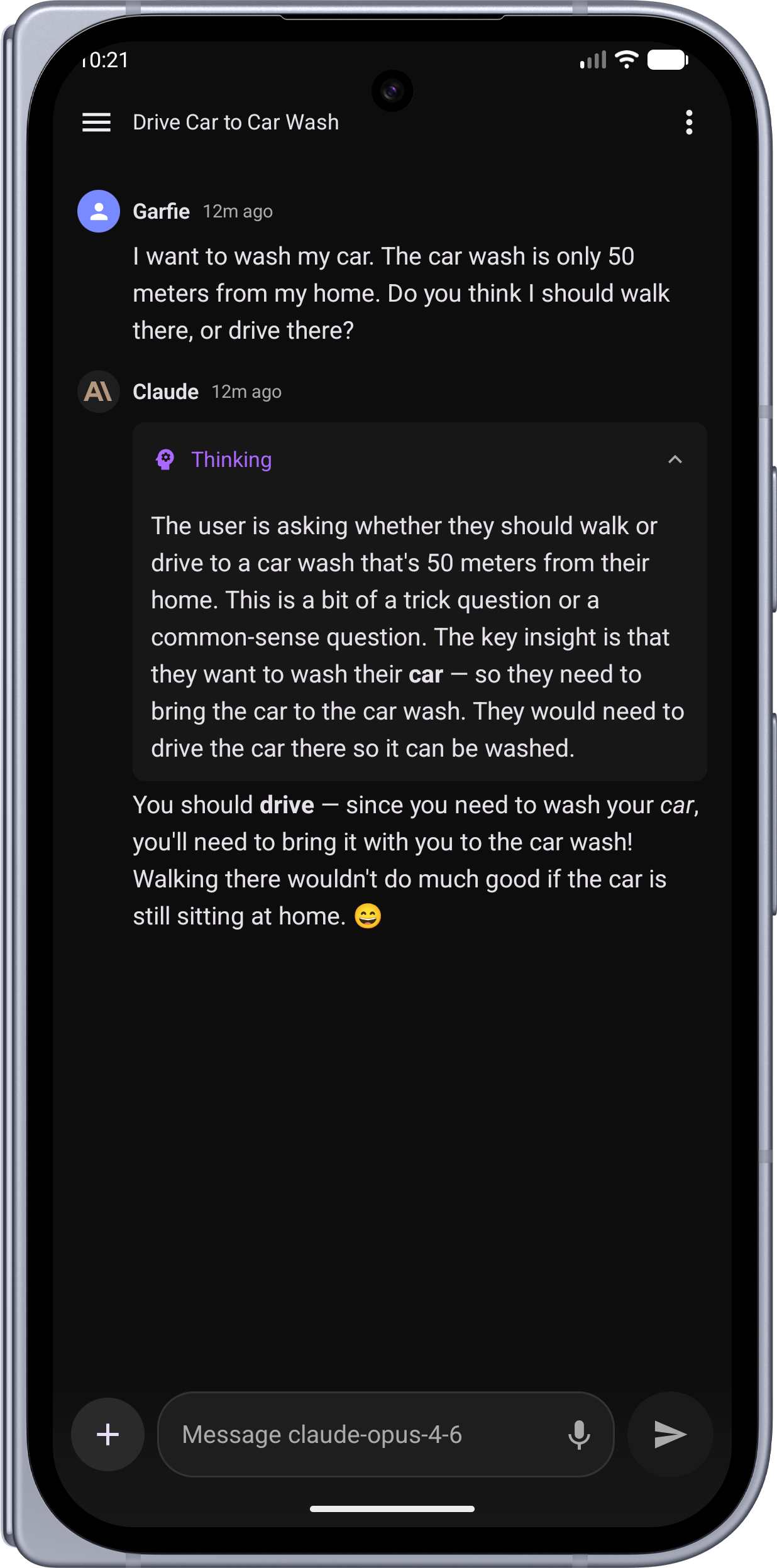 |
|  |
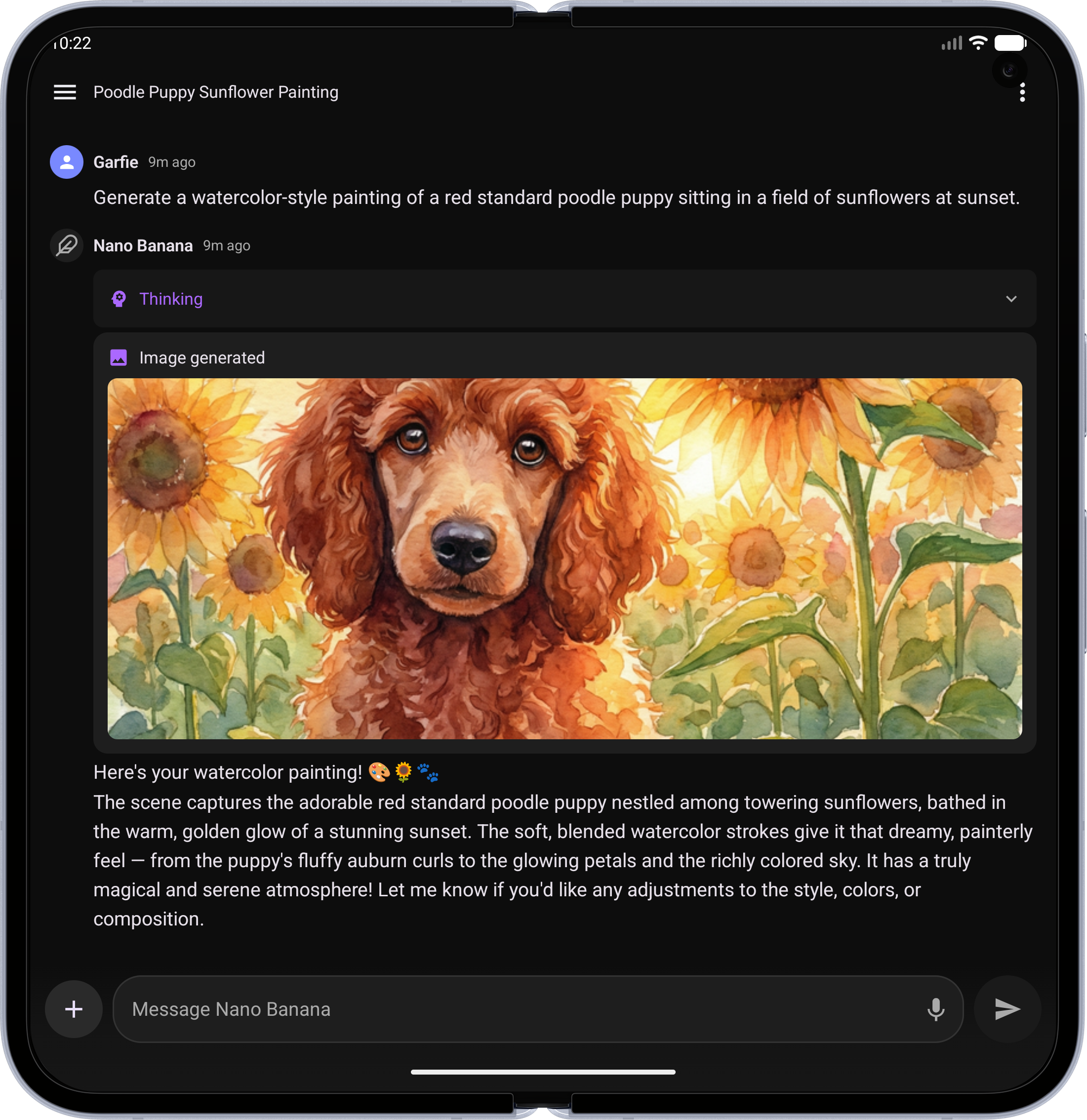
| **Image Generation** — AI-generated images via agents |
|
| **Image Generation** — AI-generated images via agents | 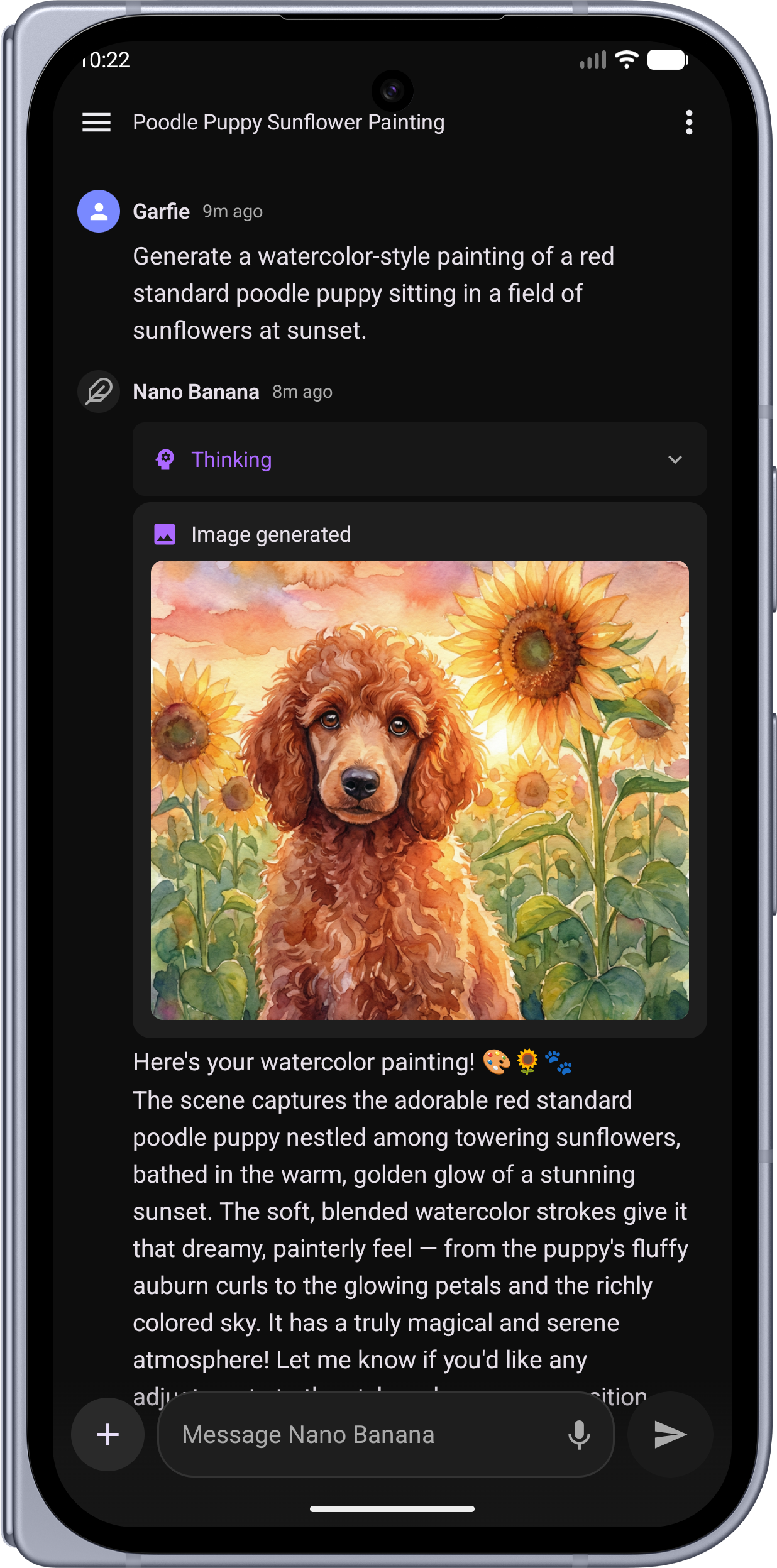 |
|  |
| **Chat Options** — Attach files, switch models, toggle tools, and tune parameters |
|
| **Chat Options** — Attach files, switch models, toggle tools, and tune parameters | 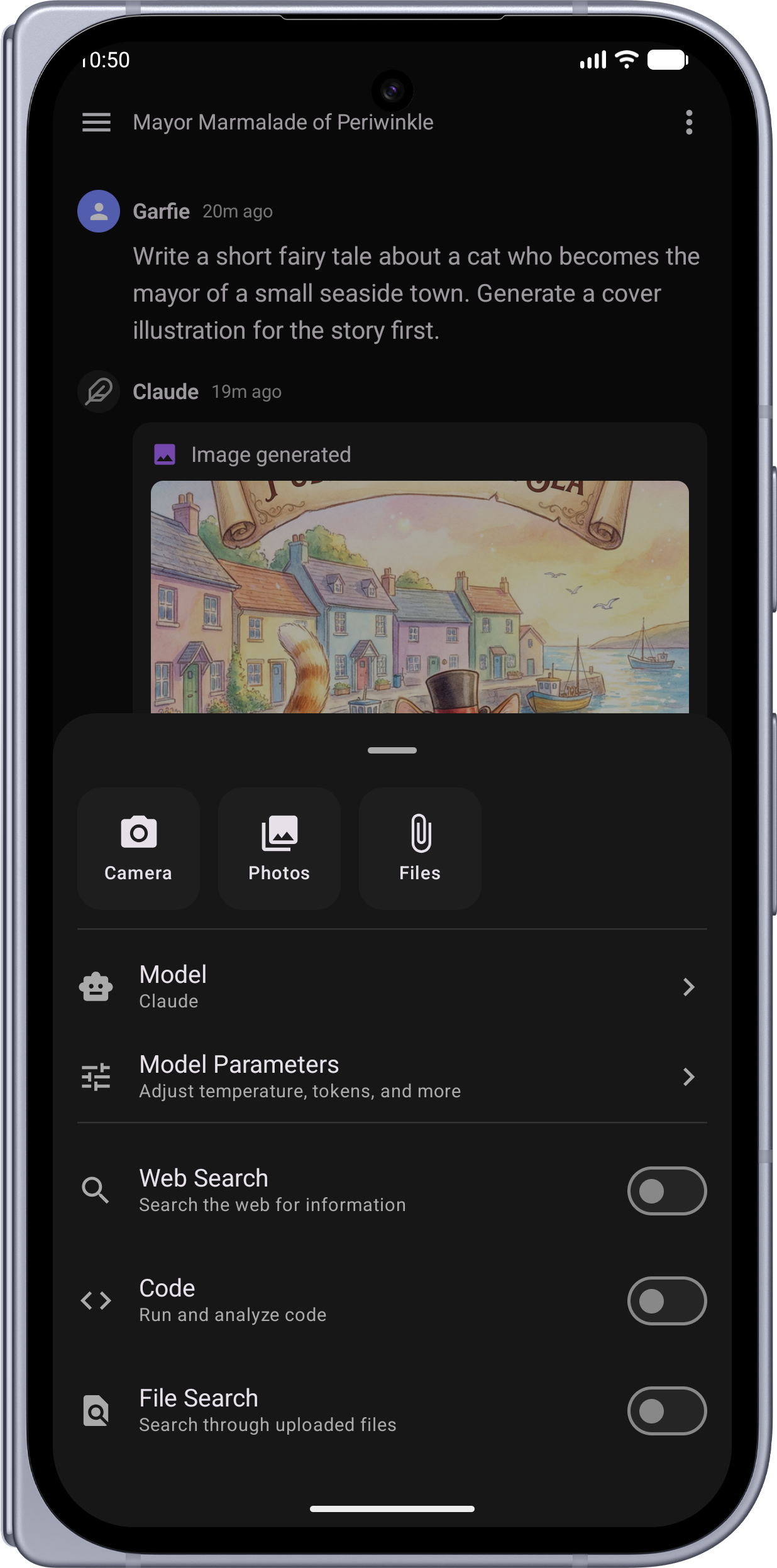 |
| 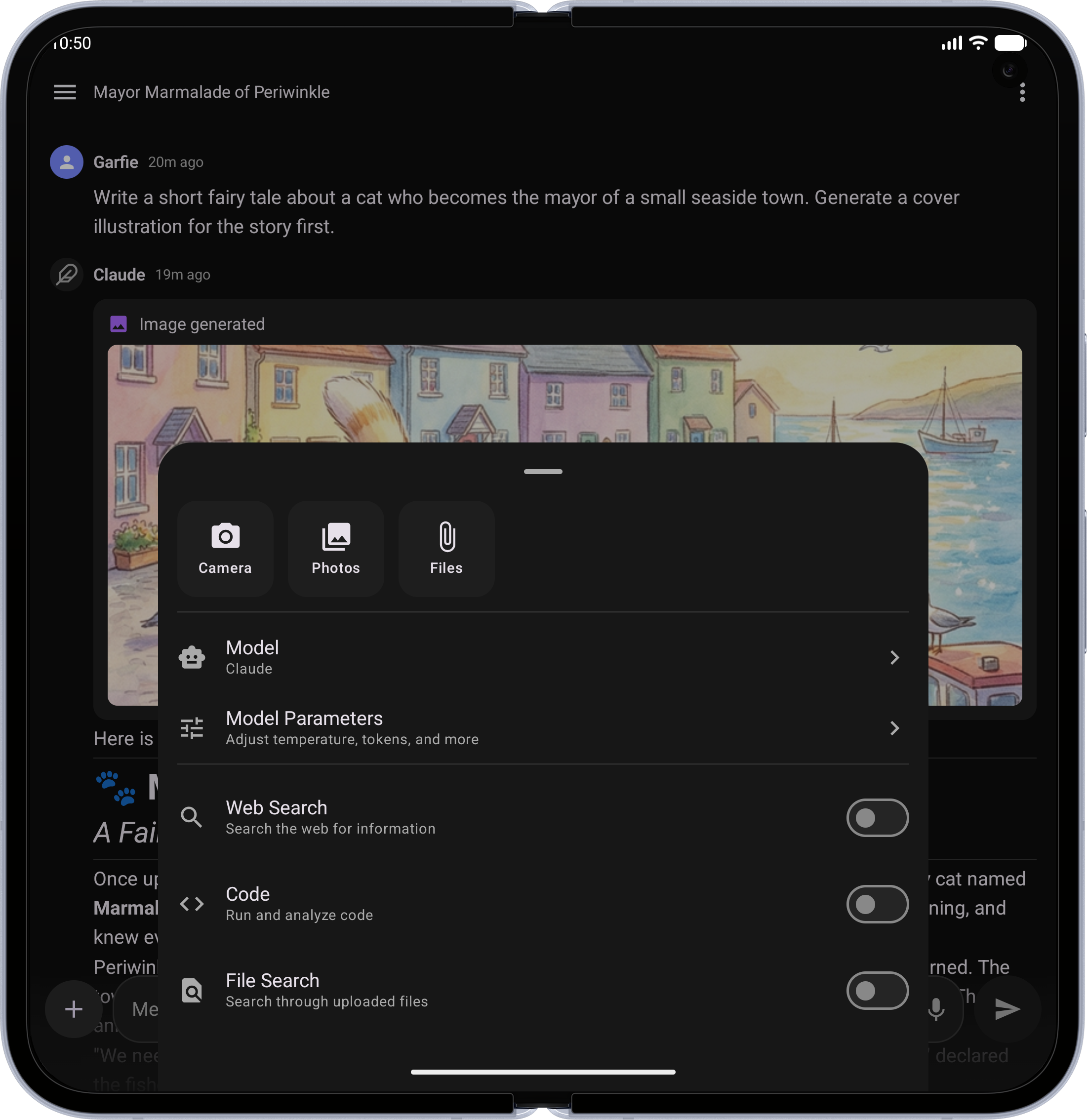 |
| **Model Selection** — Searchable bottom sheet with models grouped by provider |
|
| **Model Selection** — Searchable bottom sheet with models grouped by provider | 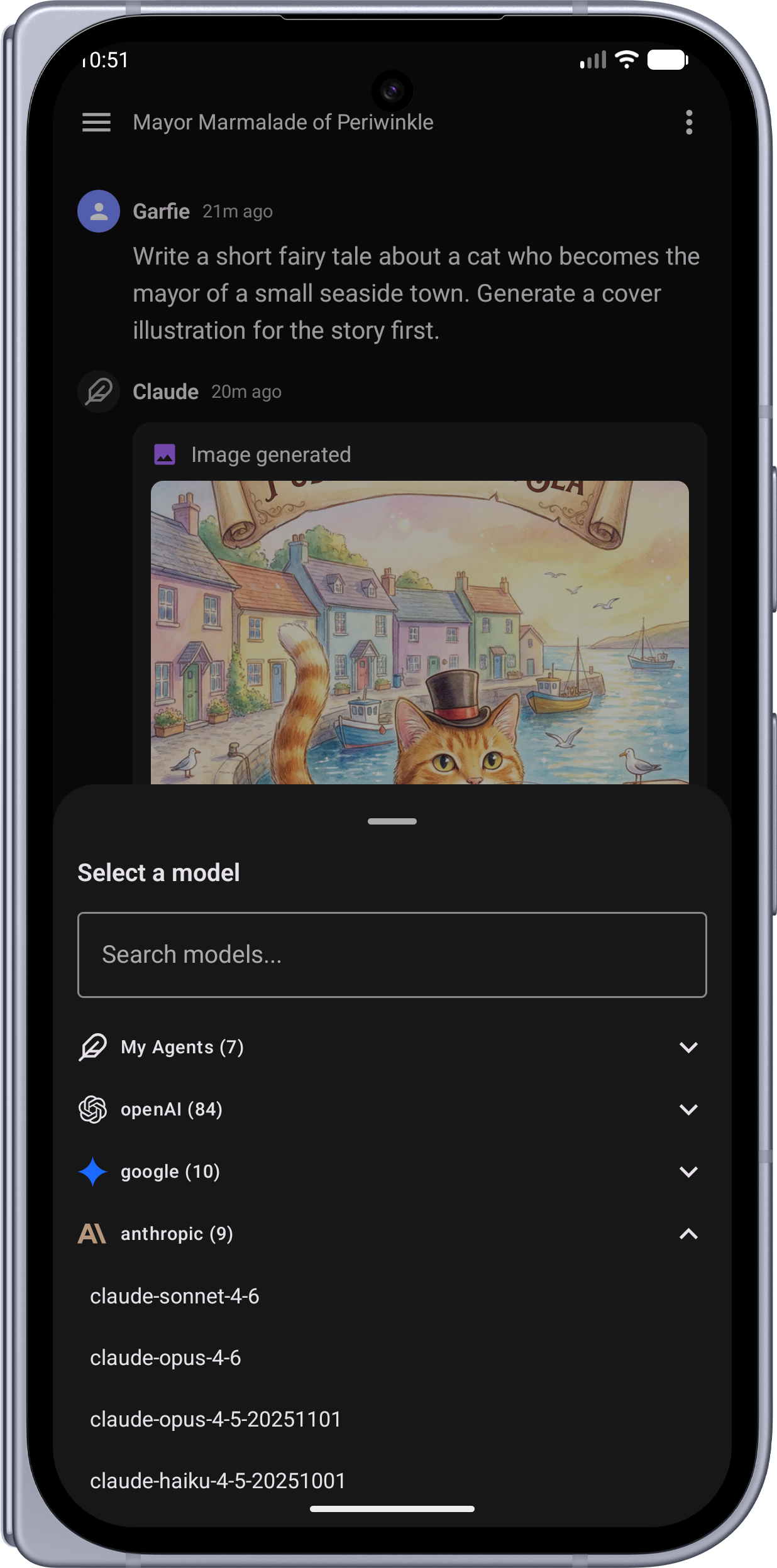 |
| 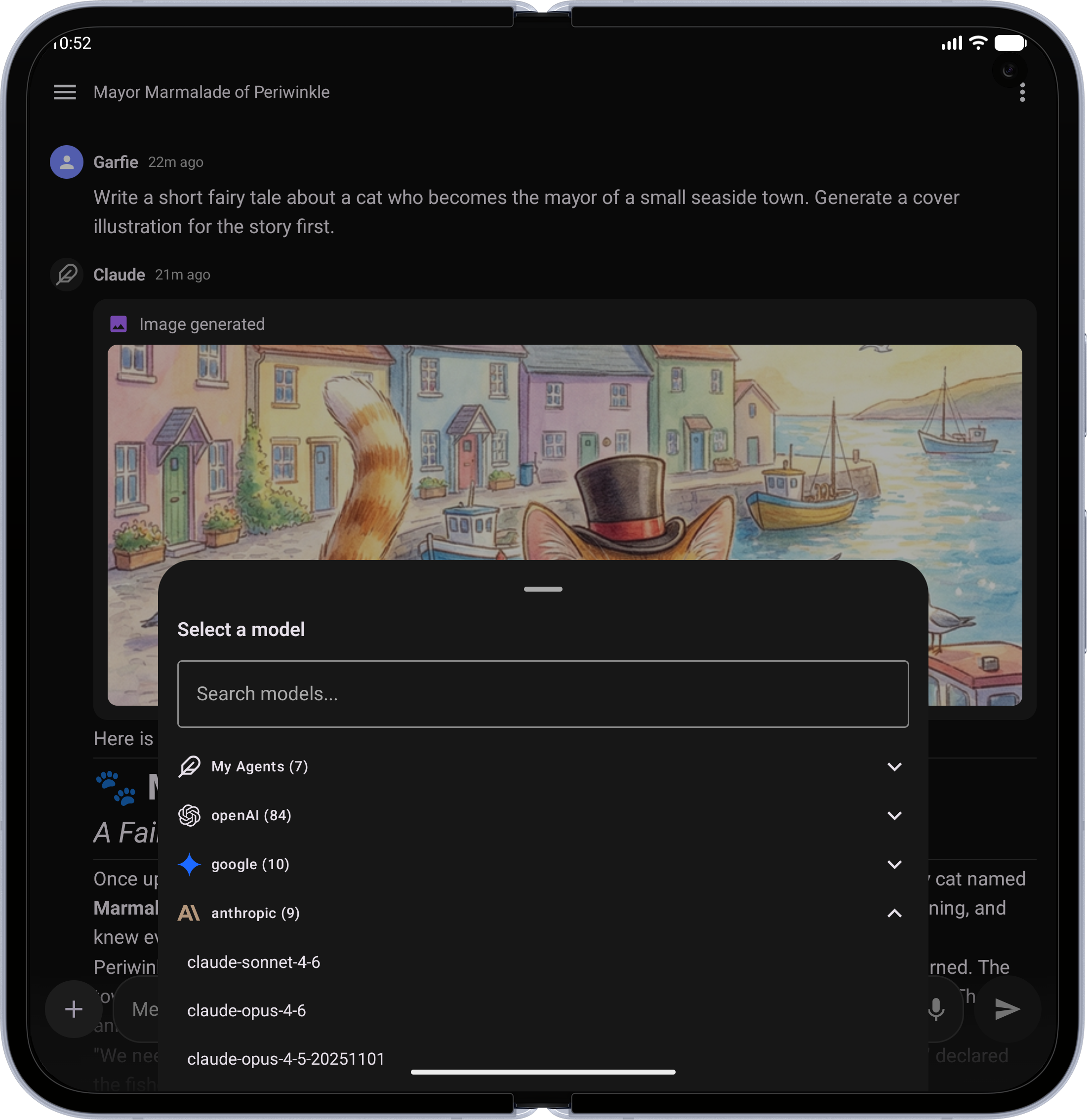 |
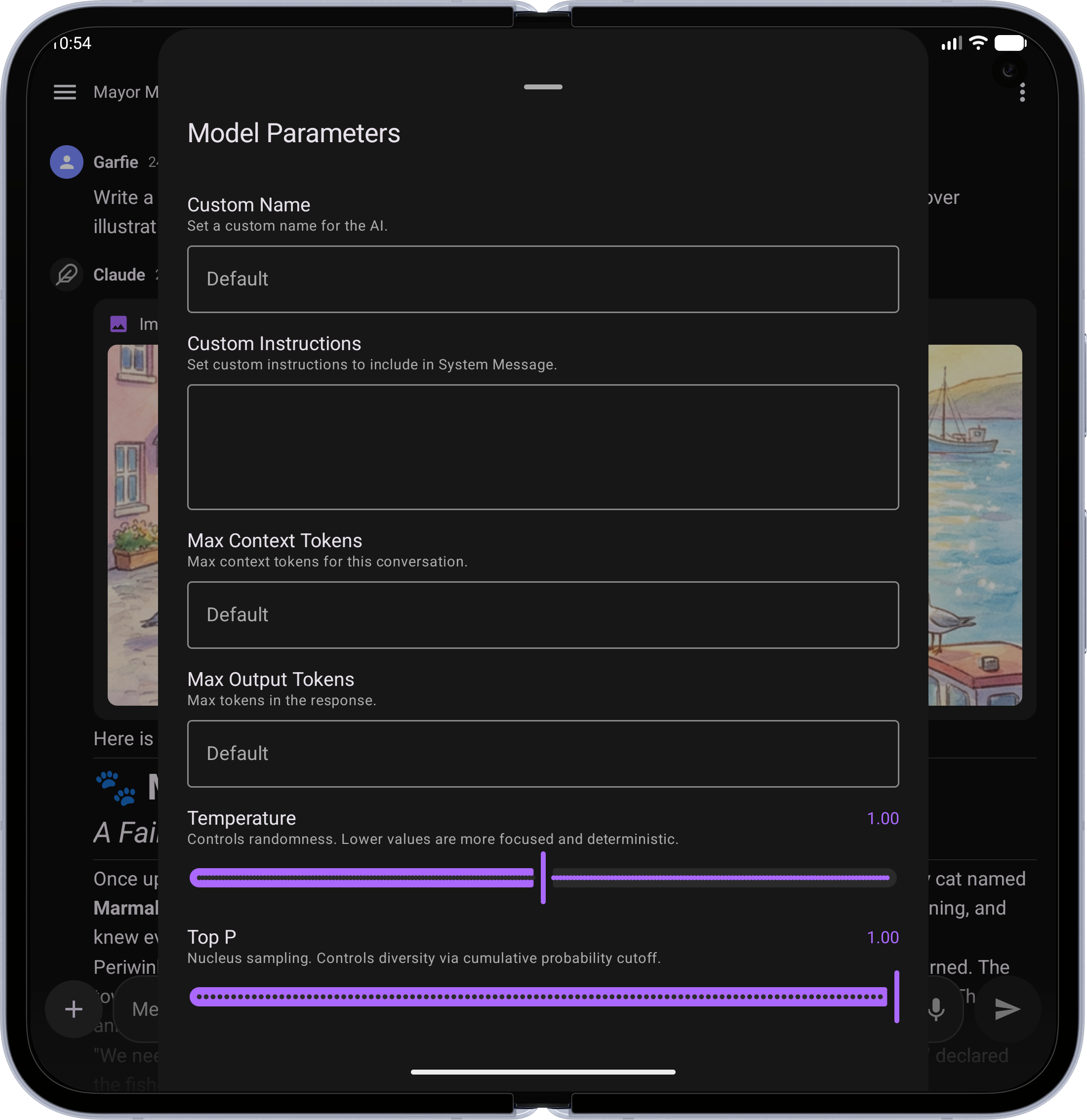
| **Model Parameters** — Fine-tune temperature, top-p, tokens, and custom instructions |
|
| **Model Parameters** — Fine-tune temperature, top-p, tokens, and custom instructions | 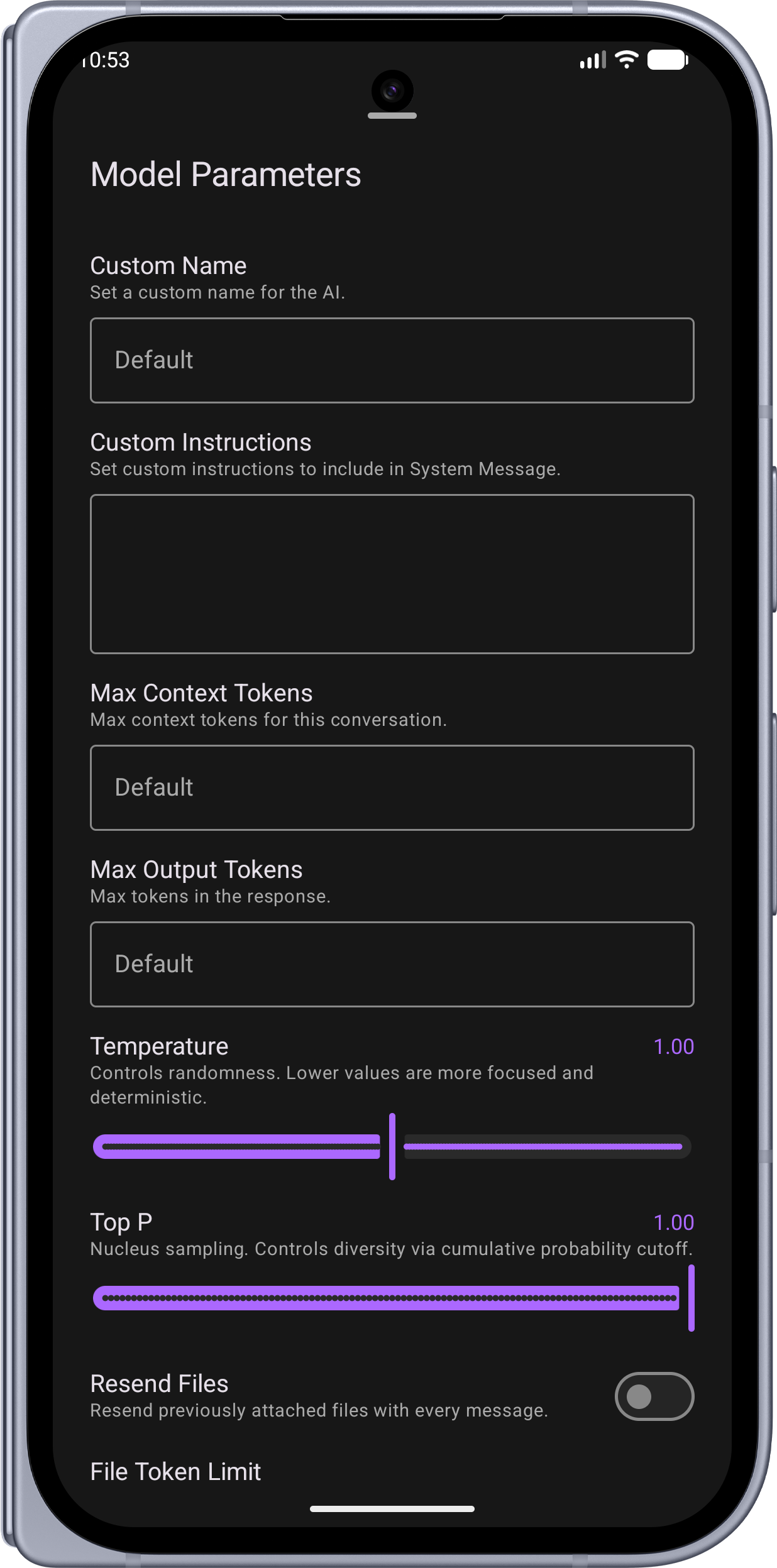 |
|  |
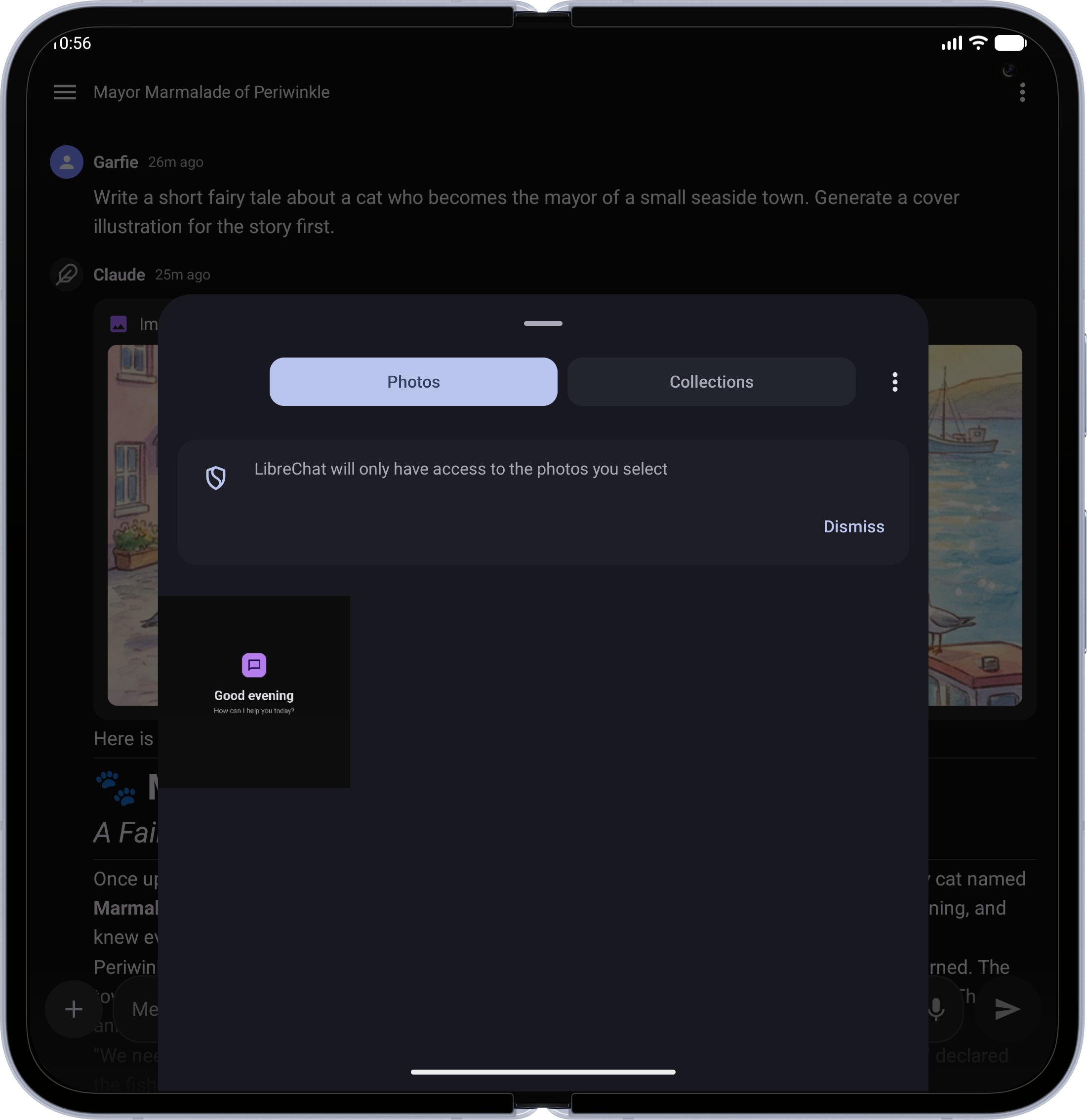
| **Photo Upload** — Attach images from your gallery or camera |
|
| **Photo Upload** — Attach images from your gallery or camera | 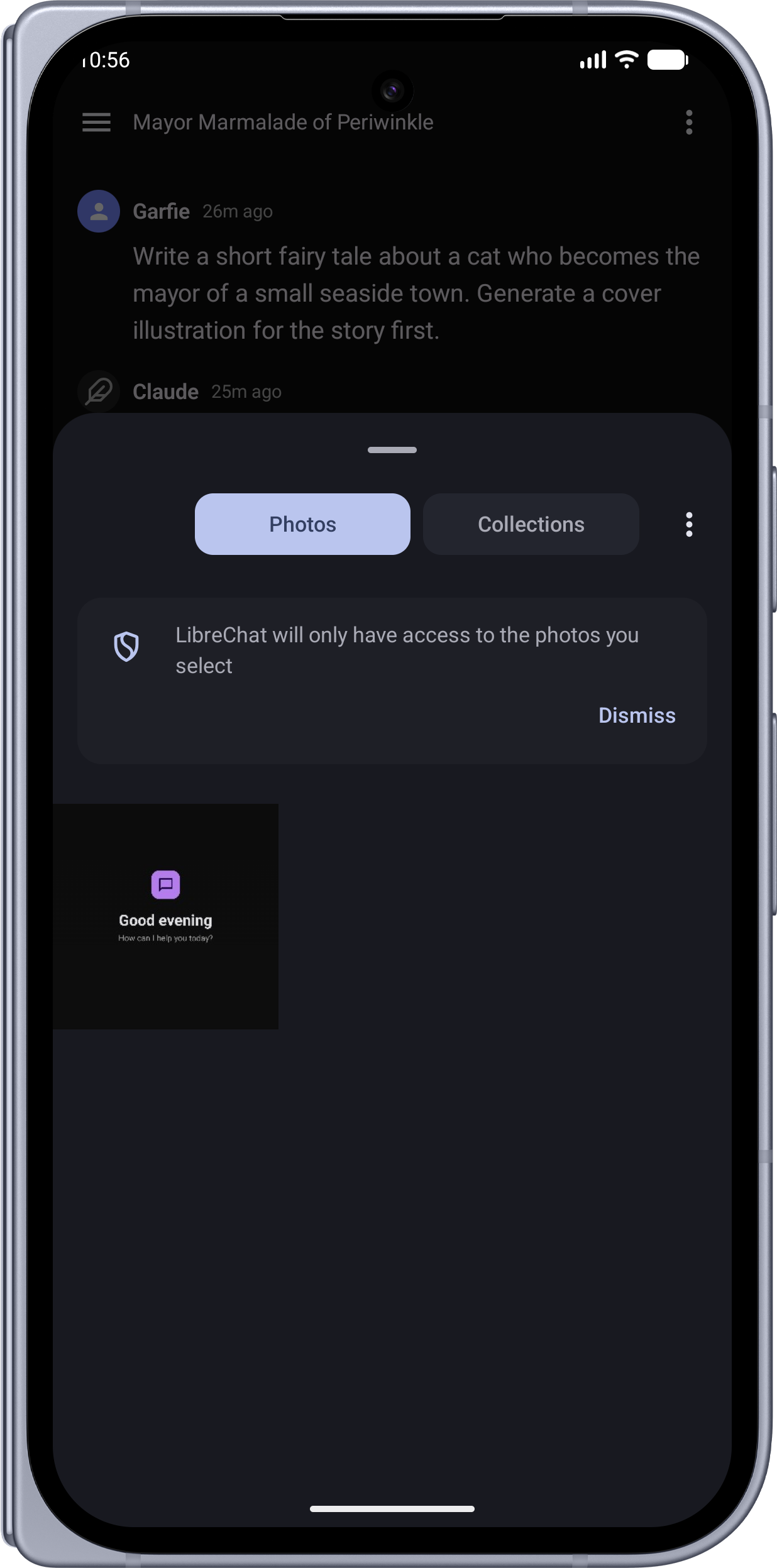 |
|  |
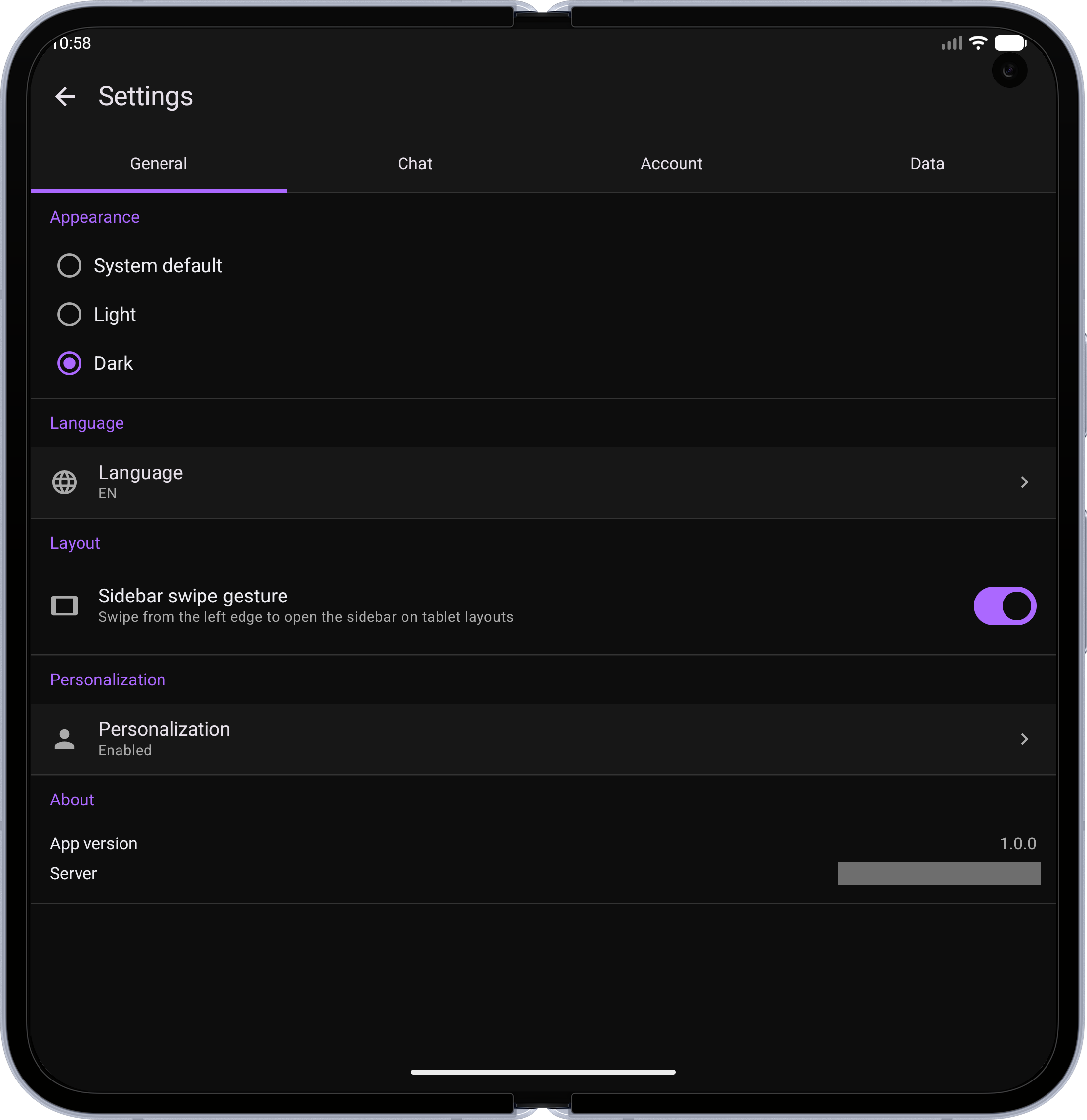
| **Settings** — Theme, language, layout, and personalization options |
|
| **Settings** — Theme, language, layout, and personalization options | 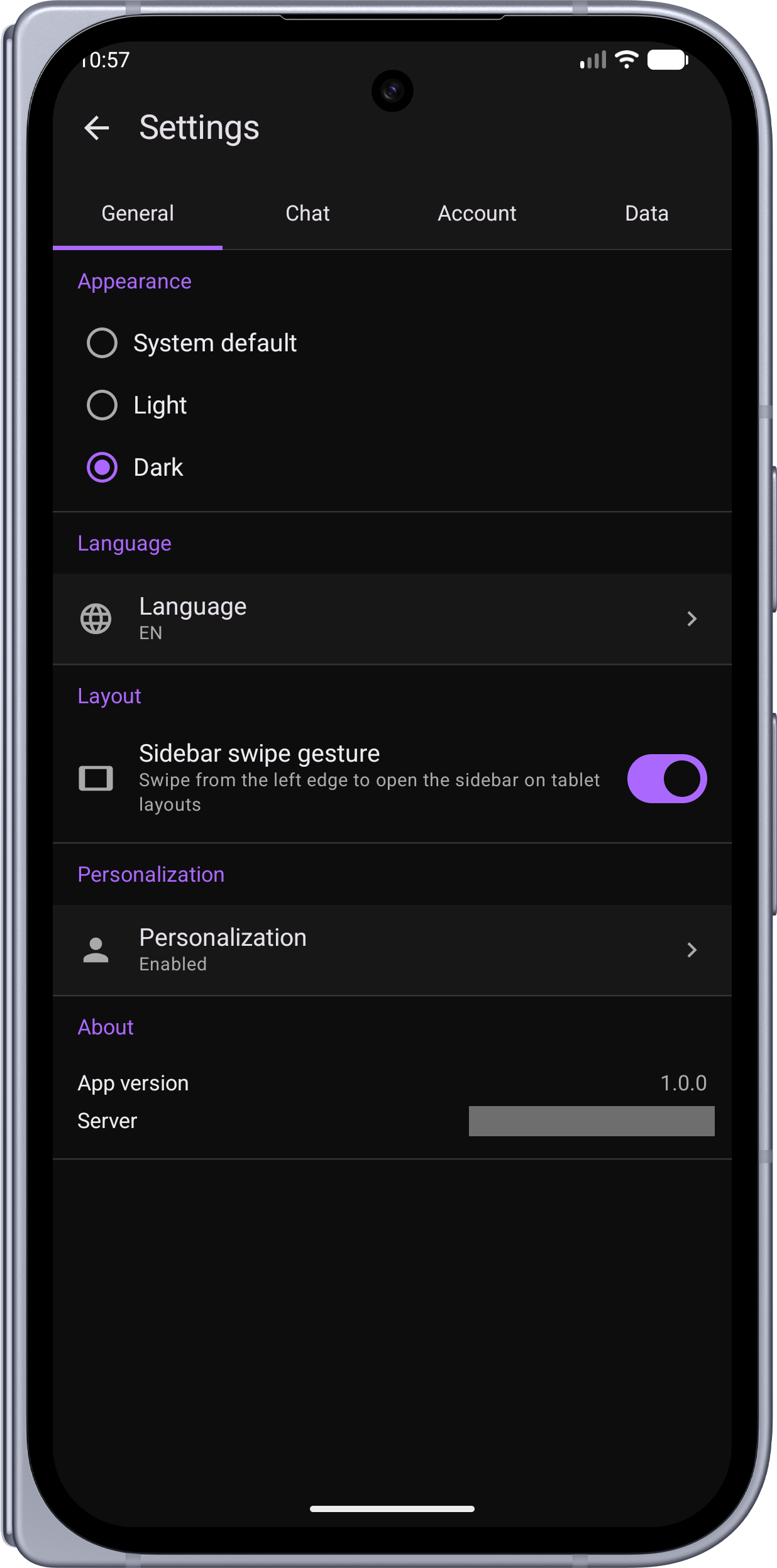 |
|  |
## Server Setup
The app works with any standard LibreChat server. During onboarding, you'll enter your server URL (e.g., `https://chat.example.com` or `http://192.168.1.100:3080`).
### Required Configuration
Add the following to your LibreChat server's `.env` file:
```env
# Safety net for native app clients.
# The app sends a browser User-Agent to pass the uaParser middleware,
# but if it ever fails to parse, this prevents ban point accumulation.
NON_BROWSER_VIOLATION_SCORE=0
```
Without this setting, the server's violation system may accumulate ban points against the mobile client if the User-Agent check fails, eventually locking the account out.
### Self-Signed Certificates (iOS)
The iOS app can connect to a LibreChat server using a self-signed certificate, but iOS enforces strict requirements on all TLS certificates regardless of whether they are self-signed or CA-issued. The certificate must meet **all** of the following or iOS will reject the connection:
| Requirement | Details |
|---|---|
| **Validity period** | ≤ 398 days (for certificates issued after September 1, 2020) |
| **Subject Alternative Name** | DNS name must be present in the SAN extension — CommonName alone is not accepted |
| **Key algorithm** | RSA ≥ 2048 bits |
| **Signature algorithm** | SHA-256 or better (SHA-1 is not accepted) |
| **Extended Key Usage** | Must include `id-kp-serverAuth` (TLS Web Server Authentication) |
The 398-day validity limit is the most common cause of failures — a certificate that works in every browser but was generated with a multi-year validity will be rejected by iOS.
**Setup steps:**
1. Generate a compliant certificate signed by your own CA (tools like [`mkcert`](https://github.com/FiloSottile/mkcert) handle all requirements automatically)
2. On your iPhone: **Settings → General → VPN & Device Management** — install your CA certificate
3. Go to **Settings → General → About → Certificate Trust Settings** — enable full trust for your CA
Once the CA is trusted on the device, you only need to re-install it if you create a new CA. The server certificate itself (which you replace when it expires) does not need to be installed separately.
> **Android** has no equivalent restrictions — self-signed certificates with any validity period work as long as the CA is trusted on the device.
### Notes
- **Registration** — The app respects your server's registration settings. If registration is disabled server-side, only the login form is shown.
## Requirements
| Tool | Version |
|------|---------|
| JDK | 17+ |
| Android Studio or IntelliJ IDEA | Latest stable (recommended IDE for all code editing) |
| Xcode | 15+ (iOS only, Apple Silicon Mac required — IDE not needed, CLI only) |
| iOS Deployment Target | 16.0+ |
| Gradle | 9.4.1 (via wrapper) |
| Kotlin | 2.3.20 |
## Building from Source
### Android
```bash
./gradlew assembleDebug
```
The debug APK will be at `app/build/outputs/apk/debug/app-debug.apk`.
For a release build:
```bash
./gradlew assembleRelease
```
### iOS
**Simulator:**
```bash
./gradlew :shared:linkDebugFrameworkIosSimulatorArm64
xcodebuild -project iosApp/iosApp.xcodeproj -scheme iosApp \
-sdk iphonesimulator \
-destination 'platform=iOS Simulator,name=iPhone 16' \
-derivedDataPath iosApp/build build
```
**Physical device:**
```bash
./gradlew :shared:linkDebugFrameworkIosArm64
open iosApp/iosApp.xcodeproj
```
Then in Xcode: select your device, set your Team under Signing & Capabilities, and press ⌘R.
See [iosApp/README.md](iosApp/README.md) for full build and launch instructions.
### Tech Stack
- Kotlin Multiplatform (KMP) with shared business logic
- Jetpack Compose (Android) + Compose Multiplatform (iOS)
- Koin (dependency injection)
- Ktor Client (OkHttp on Android, Darwin on iOS)
- Kotlinx Serialization
- Room (cache), DataStore (preferences), EncryptedSharedPreferences / Keychain (tokens)
- Kotlin 2.3.20, compileSdk 36, minSdk 26
## Contributing
See [CONTRIBUTING.md](CONTRIBUTING.md) for development setup, code style, and PR guidelines.
## License
This project is licensed under the [MIT License](LICENSE).
|
## Server Setup
The app works with any standard LibreChat server. During onboarding, you'll enter your server URL (e.g., `https://chat.example.com` or `http://192.168.1.100:3080`).
### Required Configuration
Add the following to your LibreChat server's `.env` file:
```env
# Safety net for native app clients.
# The app sends a browser User-Agent to pass the uaParser middleware,
# but if it ever fails to parse, this prevents ban point accumulation.
NON_BROWSER_VIOLATION_SCORE=0
```
Without this setting, the server's violation system may accumulate ban points against the mobile client if the User-Agent check fails, eventually locking the account out.
### Self-Signed Certificates (iOS)
The iOS app can connect to a LibreChat server using a self-signed certificate, but iOS enforces strict requirements on all TLS certificates regardless of whether they are self-signed or CA-issued. The certificate must meet **all** of the following or iOS will reject the connection:
| Requirement | Details |
|---|---|
| **Validity period** | ≤ 398 days (for certificates issued after September 1, 2020) |
| **Subject Alternative Name** | DNS name must be present in the SAN extension — CommonName alone is not accepted |
| **Key algorithm** | RSA ≥ 2048 bits |
| **Signature algorithm** | SHA-256 or better (SHA-1 is not accepted) |
| **Extended Key Usage** | Must include `id-kp-serverAuth` (TLS Web Server Authentication) |
The 398-day validity limit is the most common cause of failures — a certificate that works in every browser but was generated with a multi-year validity will be rejected by iOS.
**Setup steps:**
1. Generate a compliant certificate signed by your own CA (tools like [`mkcert`](https://github.com/FiloSottile/mkcert) handle all requirements automatically)
2. On your iPhone: **Settings → General → VPN & Device Management** — install your CA certificate
3. Go to **Settings → General → About → Certificate Trust Settings** — enable full trust for your CA
Once the CA is trusted on the device, you only need to re-install it if you create a new CA. The server certificate itself (which you replace when it expires) does not need to be installed separately.
> **Android** has no equivalent restrictions — self-signed certificates with any validity period work as long as the CA is trusted on the device.
### Notes
- **Registration** — The app respects your server's registration settings. If registration is disabled server-side, only the login form is shown.
## Requirements
| Tool | Version |
|------|---------|
| JDK | 17+ |
| Android Studio or IntelliJ IDEA | Latest stable (recommended IDE for all code editing) |
| Xcode | 15+ (iOS only, Apple Silicon Mac required — IDE not needed, CLI only) |
| iOS Deployment Target | 16.0+ |
| Gradle | 9.4.1 (via wrapper) |
| Kotlin | 2.3.20 |
## Building from Source
### Android
```bash
./gradlew assembleDebug
```
The debug APK will be at `app/build/outputs/apk/debug/app-debug.apk`.
For a release build:
```bash
./gradlew assembleRelease
```
### iOS
**Simulator:**
```bash
./gradlew :shared:linkDebugFrameworkIosSimulatorArm64
xcodebuild -project iosApp/iosApp.xcodeproj -scheme iosApp \
-sdk iphonesimulator \
-destination 'platform=iOS Simulator,name=iPhone 16' \
-derivedDataPath iosApp/build build
```
**Physical device:**
```bash
./gradlew :shared:linkDebugFrameworkIosArm64
open iosApp/iosApp.xcodeproj
```
Then in Xcode: select your device, set your Team under Signing & Capabilities, and press ⌘R.
See [iosApp/README.md](iosApp/README.md) for full build and launch instructions.
### Tech Stack
- Kotlin Multiplatform (KMP) with shared business logic
- Jetpack Compose (Android) + Compose Multiplatform (iOS)
- Koin (dependency injection)
- Ktor Client (OkHttp on Android, Darwin on iOS)
- Kotlinx Serialization
- Room (cache), DataStore (preferences), EncryptedSharedPreferences / Keychain (tokens)
- Kotlin 2.3.20, compileSdk 36, minSdk 26
## Contributing
See [CONTRIBUTING.md](CONTRIBUTING.md) for development setup, code style, and PR guidelines.
## License
This project is licensed under the [MIT License](LICENSE).